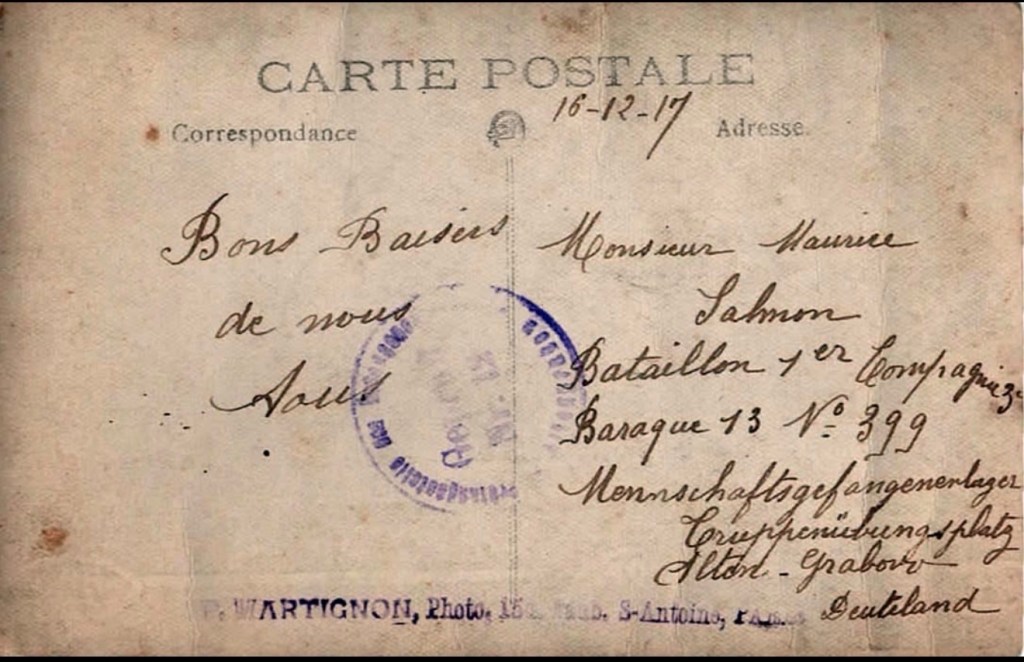
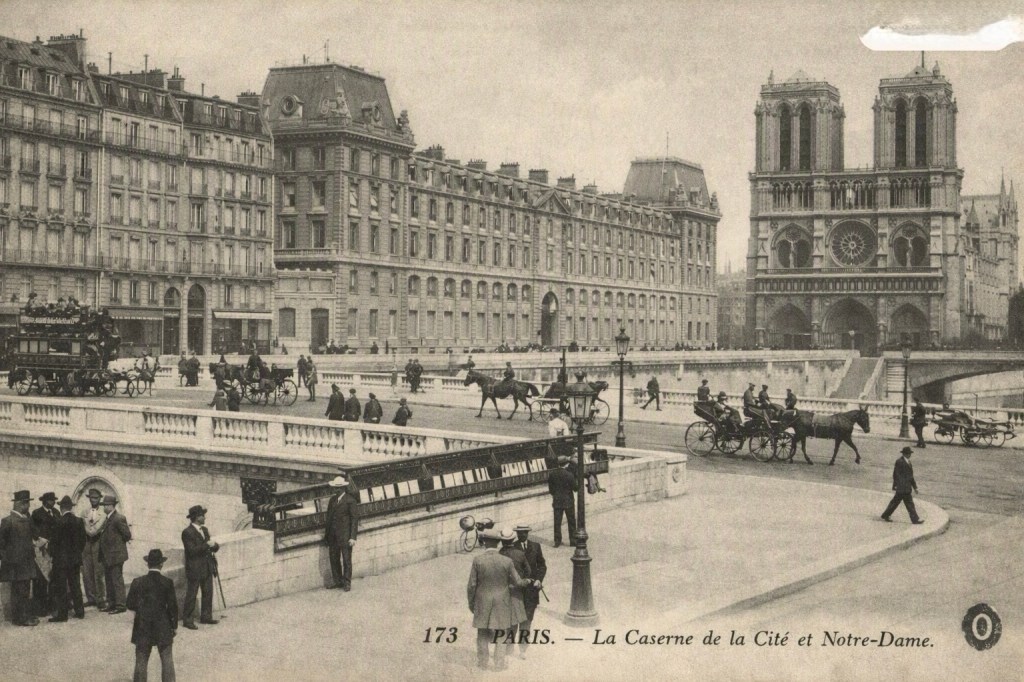
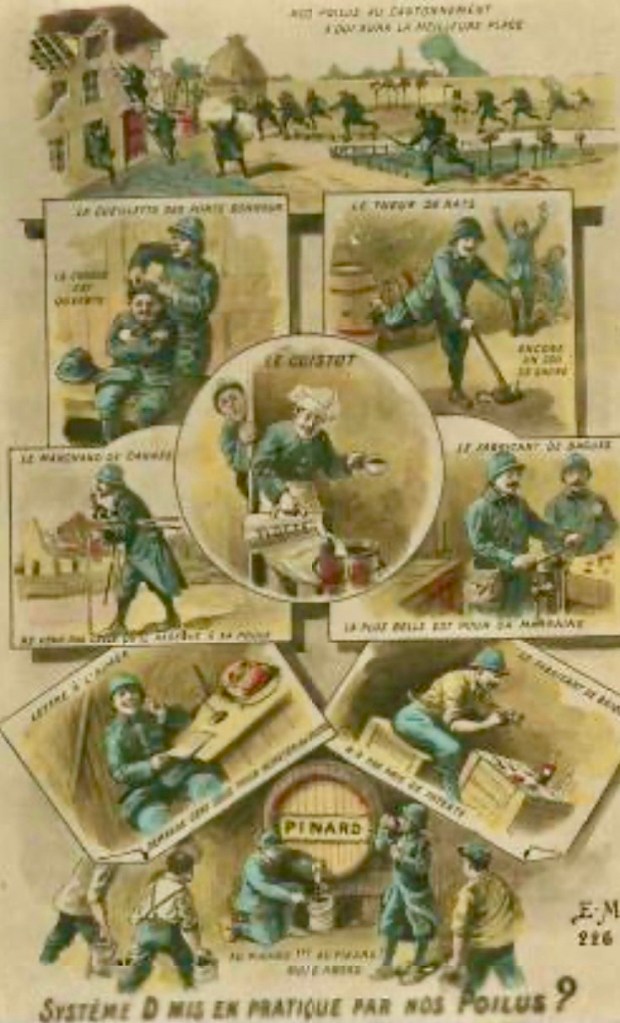
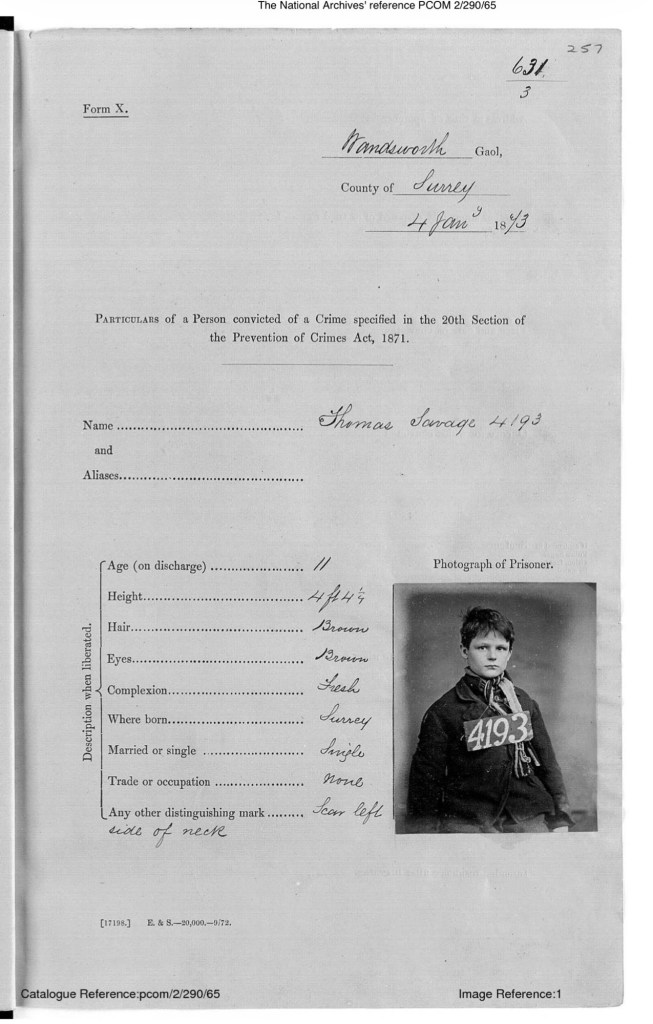
I came across this postcard almost by accident. It was sent in December 1917 to Maurice Salmon, a French prisoner of war held at Altengrabow in Germany.
There is very little written on it — just a few affectionate words from a friend — but somehow that makes it more moving. A century later, Maurice’s name is still here, written carefully on a postcard that once travelled across wartime Europe to find him in Barrack 13.
I was so touched by it that I wanted to share it, simply so that Maurice might live for a moment again and his name would not disappear into the margins.
If anyone knows anything about Maurice Salmon, his military service, his capture, or his life before or after the war, I would be very grateful to hear from you.
Transcription below, as best that I can understand –
This is a French postcard sent to a French prisoner of war in Germany, dated 16 December 1917.
The address reads approximately:
Monsieur Maurice Salmon Bataillon 1er Compagnie 3 Baraque 13 No. 399 Mannschaftsgefangenenlager Truppenübungsplatz Altengrabow Deutschland
That last part is the key: Altengrabow was a major German prisoner-of-war camp and military training area in Saxony-Anhalt.
The message itself is wonderfully simple:
Bons Baisersde votreAmi
Roughly: “Fond kisses / best kisses from your friend.”
–
Such a touching message, I hope that he received it, and that it brought him some comfort.
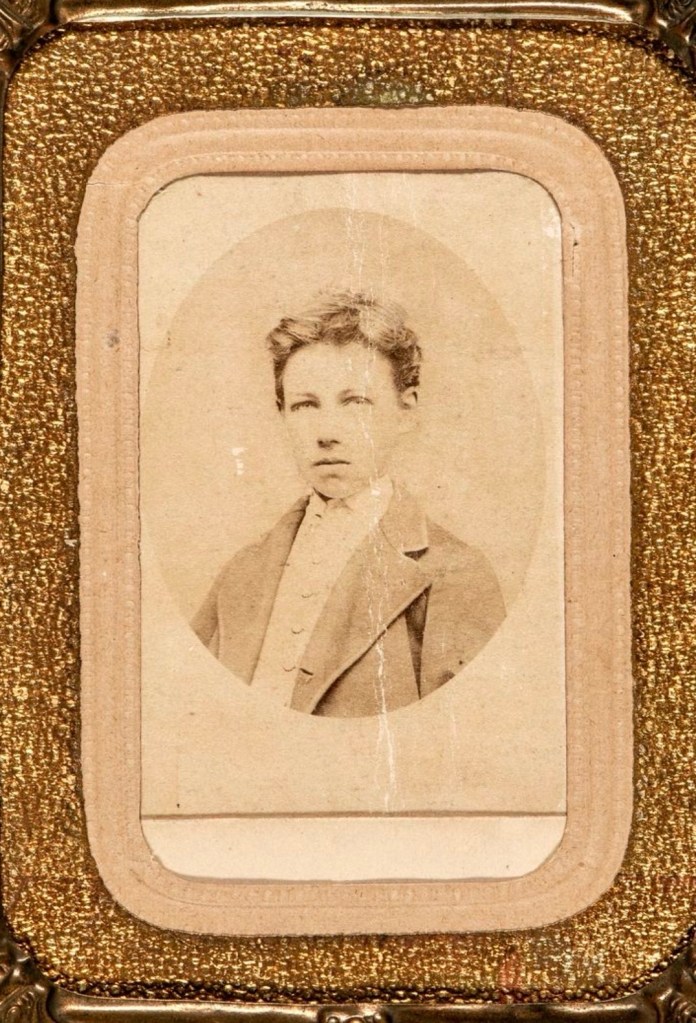
Arthur Rimbaud in 1866, around the time of his First Communion. Within a few years he would be at the centre of one of the most notorious relationships in French literary history. Arthur Rimbaud, 1866. Photograph attributed to Louis Eugène Vassogne. Public domain. Digital image via Wikimedia Commons / Catherine Gide collection.
Paul Verlaine, Arthur Rimbaud and a gunshot in Brussels
On 17 April 1873, the Paris police wanted information about a man named Paul Verlaine.
He was twenty-nine years old, had once worked at the Hôtel de Ville, had remained at his post during the Paris Commune, and had recently been moving between France, Belgium and England.
The instruction was bureaucratically simple. An officer was asked to establish Verlaine’s background, his behaviour during the insurrection, his circumstances and his morality.
It was three months before he shot Arthur Rimbaud.
The documents survive because the police were already interested in Verlaine before the gun was fired. They also provide an unusual way into one of literature’s most notorious relationships: not through poetry, memoir or romantic legend, but through reports, enquiries, gossip and administrative correspondence.
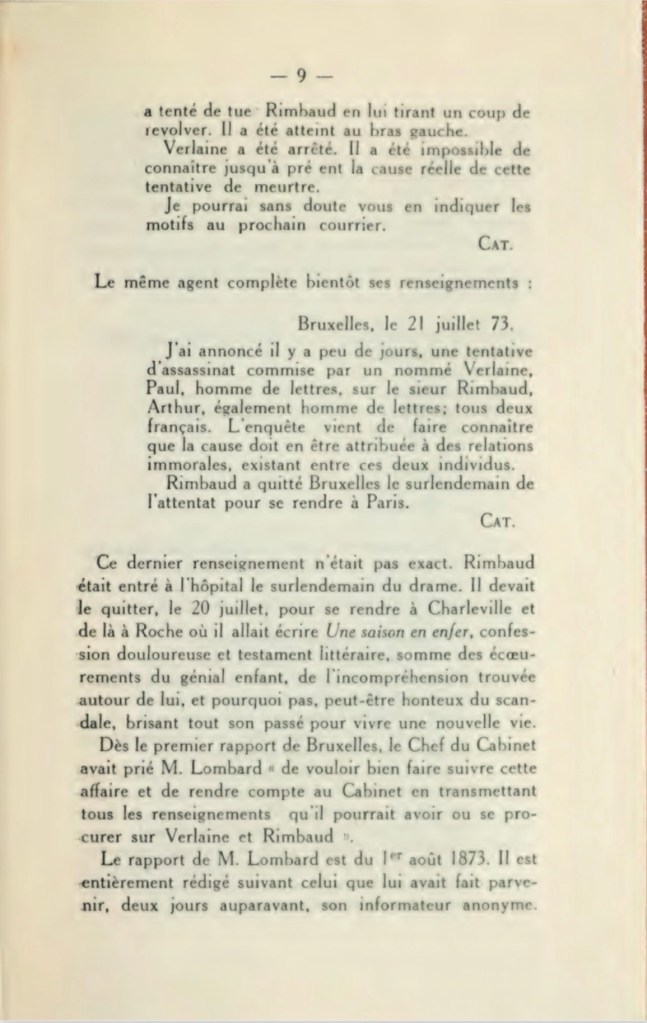
In 1944, Auguste Martin published a tiny privately printed booklet entitled Verlaine et Rimbaud: Documents inédits tirés des Archives de la Préfecture de Police. Only 150 copies were produced. Martin reproduced material he had found in the records of the Paris Prefecture of Police — documents in which two men now regarded as giants of French literature appear simply as people requiring investigation.
Police intelligence concerning the shooting, including the report of 21 July 1873 attributing the affair to what officials called “immoral relations” between Verlaine and Rimbaud. Auguste Martin, Verlaine et Rimbaud: Documents inédits tirés des Archives de la Préfecture de Police, 1944, p. 9. Copy no. 17 of an edition of 150. Digitised via Internet Archive.
Two poets under observation
By 1873 Paul Verlaine was already an established poet. Arthur Rimbaud was something altogether stranger: a prodigiously gifted teenager from Charleville who had arrived in Paris in 1871 after sending Verlaine some of his poetry.
Rimbaud was seventeen when their relationship began.
Verlaine was married to Mathilde Mauté and had a young son. His relationship with Rimbaud became both intimate and destructive, and the two men eventually left France together. By 1872 and 1873 they were spending considerable periods in London.
The police were watching from a distance.
One London report reproduced by Martin described Verlaine as a former employee of the Prefecture of the Seine and mentioned Rimbaud as a young man from Charleville who had left France during the Commune.
Another report concentrated rather more upon their relationship.
This is where the documents become both fascinating and dangerous.
The police material is full of the assumptions of its period. Officials and informants were interested not merely in what Verlaine and Rimbaud had done but in what sort of men they believed them to be. Their homosexuality, Verlaine’s political associations and his separation from his wife became part of the same investigation into character.
The archive therefore shouldn’t be read as an impartial account of their lives.
Martin himself warns us of this.
Introducing one police report, he admits that it contains errors of classification, names, dates and circumstances. The anonymous informant who supplied much of its information seems to have known a surprising amount about the couple — but also repeated rumour as fact.
That becomes spectacularly obvious later.
Brussels, July 1873
The relationship was collapsing.
Verlaine left London for Brussels on 3 July. Rimbaud followed and joined him there on 8 July. The following day they were staying at the Hôtel À la Ville de Courtrai, at 1 rue des Brasseurs, only a short distance from Brussels’ Grand-Place.
Verlaine’s mother was staying nearby, in an adjoining room.
On the morning of 10 July 1873, Verlaine bought a small revolver in the Galeries Saint-Hubert. Later that day, during yet another confrontation over Rimbaud’s determination to leave him, he fired at Rimbaud.
Rimbaud was struck in the left wrist. Contemporary and later accounts indicate that two shots were fired, although only one struck him.
The bureaucratic version of what had happened reached the files almost immediately.
A Brussels report of 11 July stated simply that Verlaine had:
attempted to kill Rimbaud by firing a revolver at him.
Rimbaud had been wounded in the left arm. Verlaine had been arrested.
The official writing is almost comically restrained considering the circumstances.
Ten days later another report supplied what its author believed to be an explanation. The investigation, he wrote, had established that the affair resulted from what he described as “relations immorales” existing between the two men.
That phrase is important.
It doesn’t tell us what Verlaine and Rimbaud thought about their relationship. It tells us what a nineteenth-century police officer thought about it.
And from that moment, the investigation was no longer simply about a gun.
“Love like tigers”
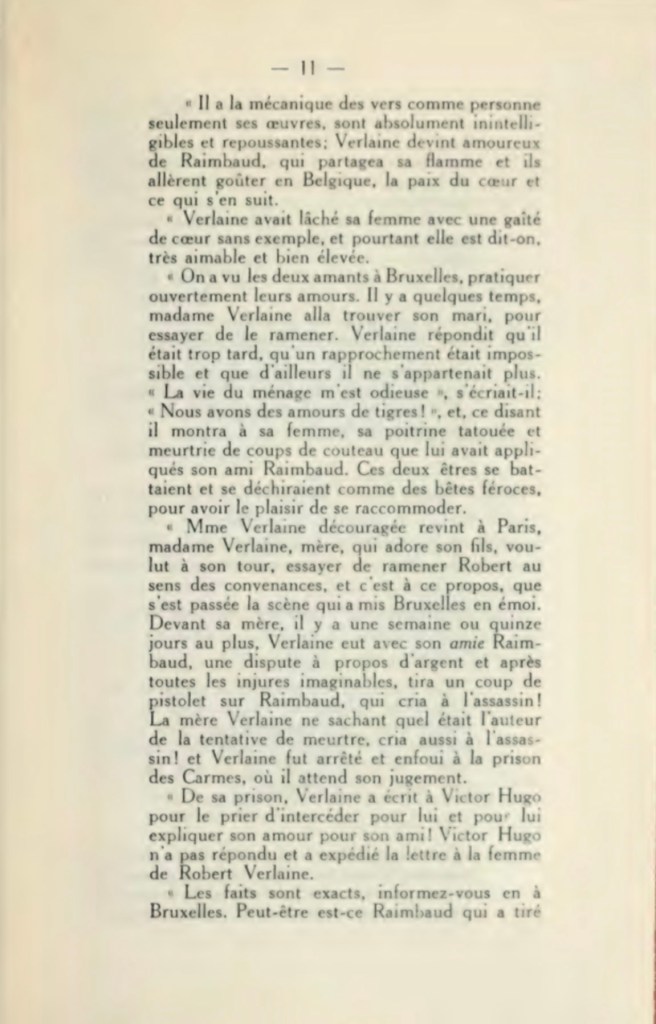
An anonymous informant’s account of Verlaine and Rimbaud, reproduced in a police report of 1 August 1873. It includes the phrase “Nous avons des amours de tigres!” — “Ours is the love of tigers” — but the informant ultimately admits uncertainty about important details. Auguste Martin, Verlaine et Rimbaud: Documents inédits tirés des Archives de la Préfecture de Police, 1944, p. 11. Copy no. 17 of an edition of 150. Digitised via Internet Archive.
The strangest document reproduced by Martin is a report dated 1 August 1873, prepared from information supplied by an anonymous source.
Its author describes Rimbaud as a gamin — a boy — brought into Parisian literary circles by Verlaine. He recounts the collapse of Verlaine’s marriage, the couple’s arguments and their life together in Belgium and England.
Then the report descends into melodrama.
According to the informant, Verlaine once described the relationship with the extraordinary expression:
“Nous avons des amours de tigres!”
“Ours is the love of tigers.”
There are stories of fights, injuries, reconciliation, drunkenness and rage. The informant confidently describes Verlaine firing the pistol and Rimbaud crying out that his companion was an assassin.
And then, at the end of the report, comes a magnificent collapse in confidence.
The informant admits that he hasn’t actually been able to establish who fired the revolver and wonders whether perhaps Rimbaud shot Verlaine instead.
He nevertheless assures the police that everything else is perfectly true.
It is a wonderful lesson in archival research.
A document can be contemporary.
It can be official.
It can contain genuine information unavailable anywhere else.
And it can still be wrong.
The investigation turns personal
There was considerably less uncertainty in the courts.
Verlaine was tried in Brussels on 8 August 1873. He was sentenced to two years’ imprisonment and fined 200 francs. The judgment was confirmed on appeal on 27 August. A Brussels police communication dated 30 August duly reported the result back to Paris. The later official correspondence reproduced by Martin confirms both the sentence and fine.
But the judicial investigation went far beyond determining who had fired the revolver.
A confidential communication from the Brussels prosecutor, written in 1882 and preserved in the police file, records that the examining magistrate had ordered Verlaine to undergo an intimate physical examination.
The doctors claimed to have found supposed signs of homosexual activity.
Such examinations were products of nineteenth-century forensic ideas about sexuality that are now discredited. Their inclusion in the file is nevertheless revealing. Verlaine was being judged not merely for an act of violence but through official scrutiny of his sexual life.
The archive therefore preserves two investigations running alongside one another.
One asked:
Did Paul Verlaine shoot Arthur Rimbaud?
The other asked:
What sort of man was Paul Verlaine?
For the police and judiciary of the period, the two questions became entangled.
Rimbaud leaves the file
Rimbaud’s part in the immediate story ended surprisingly quickly.
He was treated in hospital and subsequently returned towards Charleville and Roche. Soon afterwards Une saison en enfer — A Season in Hell — appeared in Brussels.
He was still only eighteen.
Within a few years, the extraordinary literary career for which Rimbaud would become famous was effectively over.
The police, however, remained interested in Verlaine.
The file reproduced by Martin continues long after the Brussels shooting. There are enquiries into Verlaine’s whereabouts, reports concerning his addresses, later incidents involving drink and disorder, and further observations about his associates.
In 1891, one report described a quarrel involving Verlaine, a journalist and a hotel manager.
In 1894 another police note recorded that the poet had arrived late for a literary banquet after drinking so many aperitifs that he had to be taken home.
The young man investigated because of the Commune and the scandal surrounding Rimbaud was ageing in the paperwork.
And then something curious happened.
From police subject to poet
Paul Verlaine died in January 1896.
Yet his police file did not end with his death.
Martin found later reports concerning commemorations held in 1898 and 1910.
The police were still observing gatherings connected with Verlaine — but the reason for their interest had changed.
The troublesome former municipal employee, political suspect, drunk, lover and convicted prisoner had become a celebrated poet.
Martin puts it beautifully: Verlaine had passed from the realm of police into the realm of celebrity.
There is something wonderfully strange about that transformation.
In April 1873 an official wanted to know Verlaine’s antecedents, morality and behaviour during the Commune.
In July another official reported that he had attempted to kill a young man named Arthur Rimbaud.
In August the courts sent him to prison.
Decades later, the authorities were recording people assembling to honour his memory.
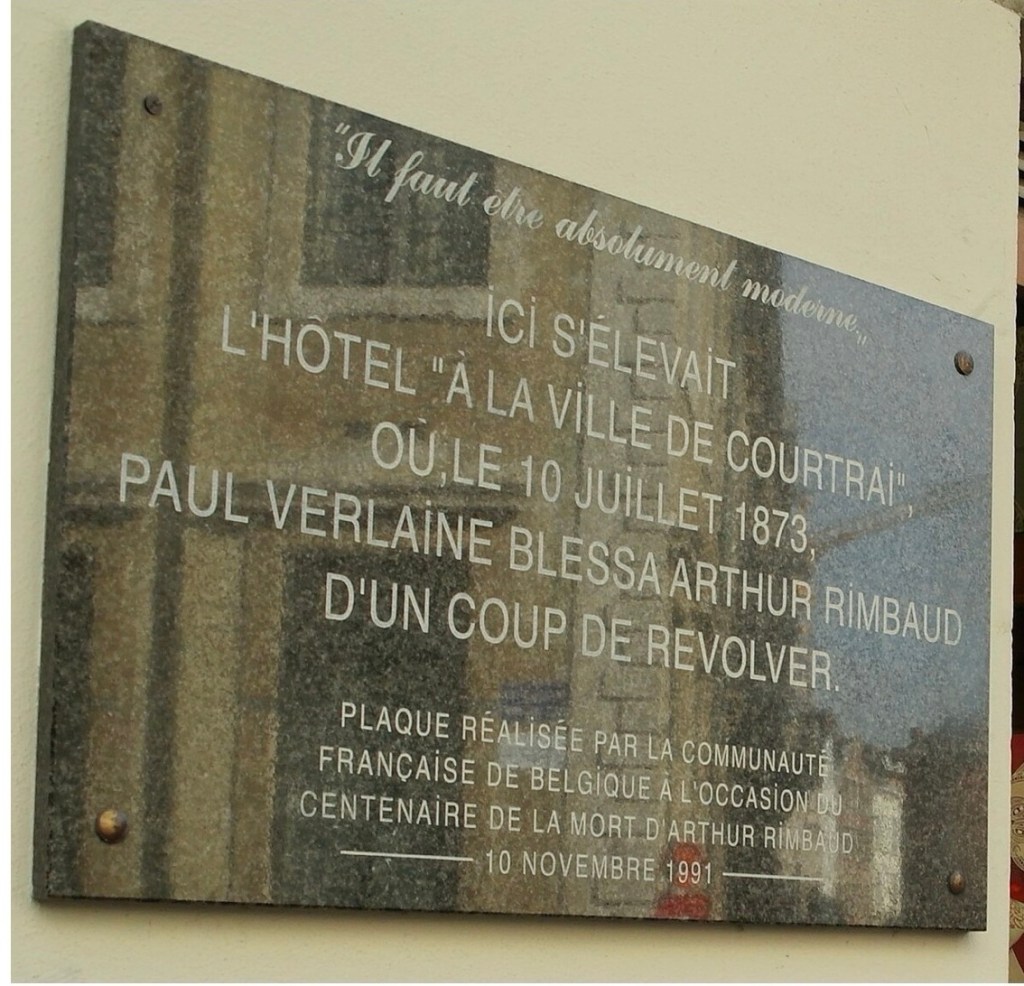
Plaque at 1 rue des Brasseurs, Brussels, marking the site of the Hôtel À la Ville de Courtrai, where Paul Verlaine wounded Arthur Rimbaud on 10 July 1873. Memorial plaque, 1 rue des Brasseurs, Brussels. Installed in 1991 for the centenary of Arthur Rimbaud’s death. Photograph via Wikimedia Commons; credit the named photographer and licence shown on the individual file page.
Today the hotel itself has disappeared. It was demolished in 1979. But at 1 rue des Brasseurs, a plaque marks the place where it once stood. The plaque was installed on 10 November 1991, the centenary of Rimbaud’s death.
Across its top are words taken from Rimbaud:
“Il faut être absolument moderne.”
One must be absolutely modern.
Below them, history has been compressed into a single sentence:
Here stood the Hôtel À la Ville de Courtrai, where on 10 July 1873 Paul Verlaine wounded Arthur Rimbaud with a revolver shot.
A relationship, a bullet, a trial and decades of police paperwork reduced to a few lines of stone.
But open the file and the people return.
Not the mythic Rimbaud and Verlaine of literary history.
Two difficult young men moving between London, Paris and Brussels; watched, discussed and judged by officials who could never have guessed that their reports would one day become part of the story themselves.
And perhaps that is the strangest survival of all.
The police were attempting to record a scandal.
They accidentally helped preserve a piece of literary history.
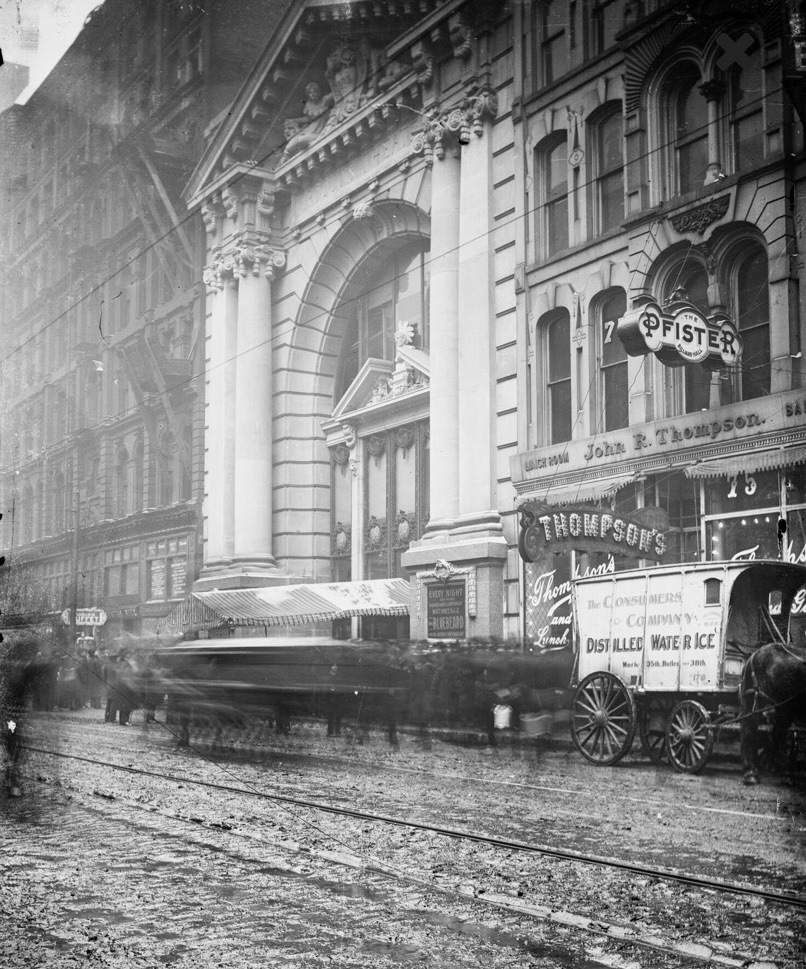
Provenance: Iroquois Theater at the time of the fire, 30 December 1903. Chicago Daily News collection, Chicago History Museum, DN-0001578. No Known Copyright.
The Iroquois Theatre Fire, Chicago, 1903
When I go to the theatre — and I visit a few times a year — I have always been irritated by the opening act.
Not the actual opening act.
The dance of the safety curtain.
Down it goes.
Up again.
Then, sometimes, down once more.
There have been occasions when I have sat there thinking that this apparently unnecessary performance is delaying the performance I actually paid to see.
I was irritated.
Now I am not.
This is why.
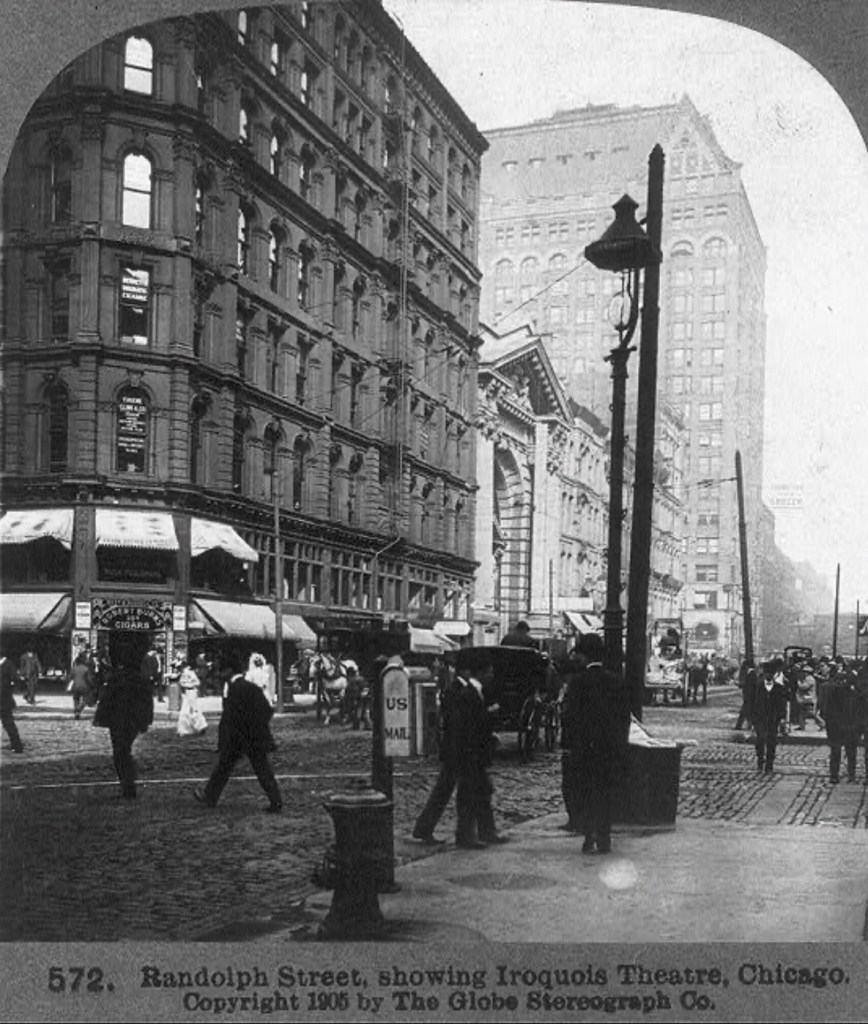
Randolph Street, showing the Iroquois Theatre, Chicago, c.1905. Library of Congress, Prints and Photographs Division. No known restrictions on publication.
Absolutely Fireproof
On 30 December 1903, the Iroquois Theatre in Chicago was barely five weeks old.
It was lavish, modern and impressive — one newspaper described it as perhaps the finest theatre in America. More importantly, its promoters had advertised it as “absolutely fireproof.”
That afternoon the theatre was packed for a matinee performance of Mr. Bluebeard. Many of those in the audience were women and children enjoying the Christmas holidays.
At around 3.15pm, during the second act, a spark from an arc light ignited material above the stage.
In a modern theatre that should have been serious, but containable.
At the Iroquois, it became catastrophic.
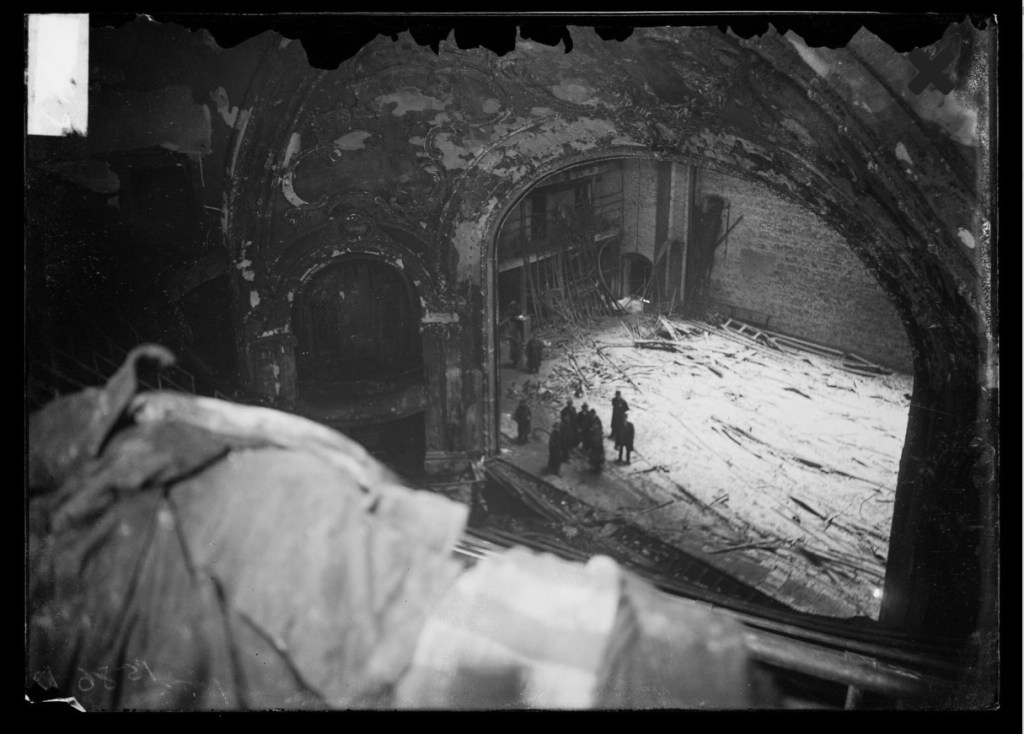
Above the performers hung an enormous quantity of combustible scenery — painted canvas, gauze, timber and rope. A later fire-safety study estimated that the stage contained more than ten tons of combustible material.
The fire spread with terrifying speed.
Actor Eddie Foy attempted to calm the audience while the orchestra continued to play. Behind him, stagehands tried to lower the theatre’s supposedly fire-resistant curtain.
It came down.
And then it stopped.
The curtain snagged before it could completely seal the stage from the auditorium.
That was the moment when something I once regarded as theatrical fussiness suddenly becomes rather important.
A safety curtain is only useful if it actually comes down.
Provenance: Ruined stage of the Iroquois Theater after the fire, 4 January 1904. Chicago Daily News collection, Chicago History Museum, DN-0001586. No Known Copyright.
The Theatre Became a Trap
The failed curtain was only one link in a much longer chain.
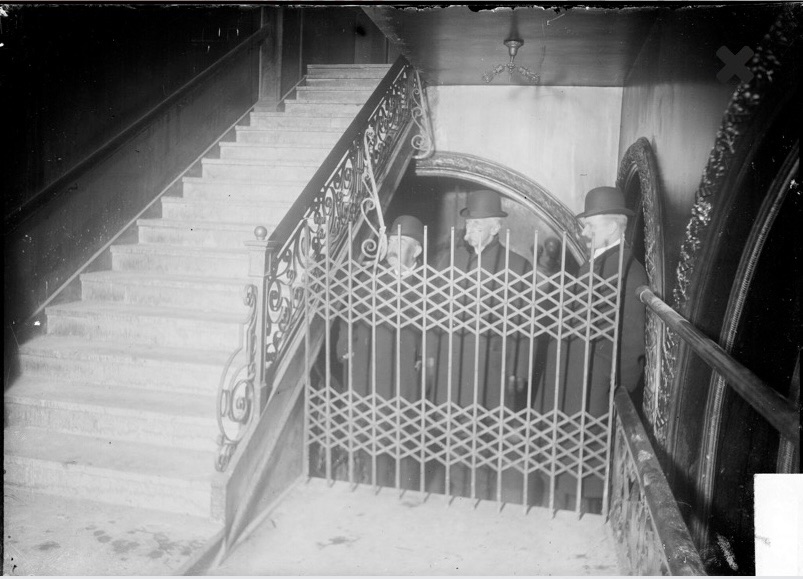
Some exits were difficult to find because they were concealed by decorative curtains. Other routes were obstructed. Metal gates separating different seating levels were locked, partly to prevent people in cheaper seats moving into more expensive areas. Some exit doors opened inward, becoming almost impossible to move once crowds pressed against them.
There were also inadequate alarms and firefighting arrangements. Roof vents intended to allow smoke and heat to escape were not functioning as they should have been.
Then another decision transformed the fire.
A large backstage door was opened as performers and stagehands tried to escape.
The sudden influx of air fed the flames.
With the safety curtain unable to isolate the stage, fire and superheated gases blasted outward into the auditorium, particularly toward the upper galleries.
People who had come to see a Christmas matinee now found themselves trapped inside a building that had been advertised as safe.
More than 600 people died; the commonly accepted figure is 602.
The Library of Congress summary of contemporary reporting is brutally simple: when firefighters arrived, they found hundreds already dead and virtually nobody left to rescue.
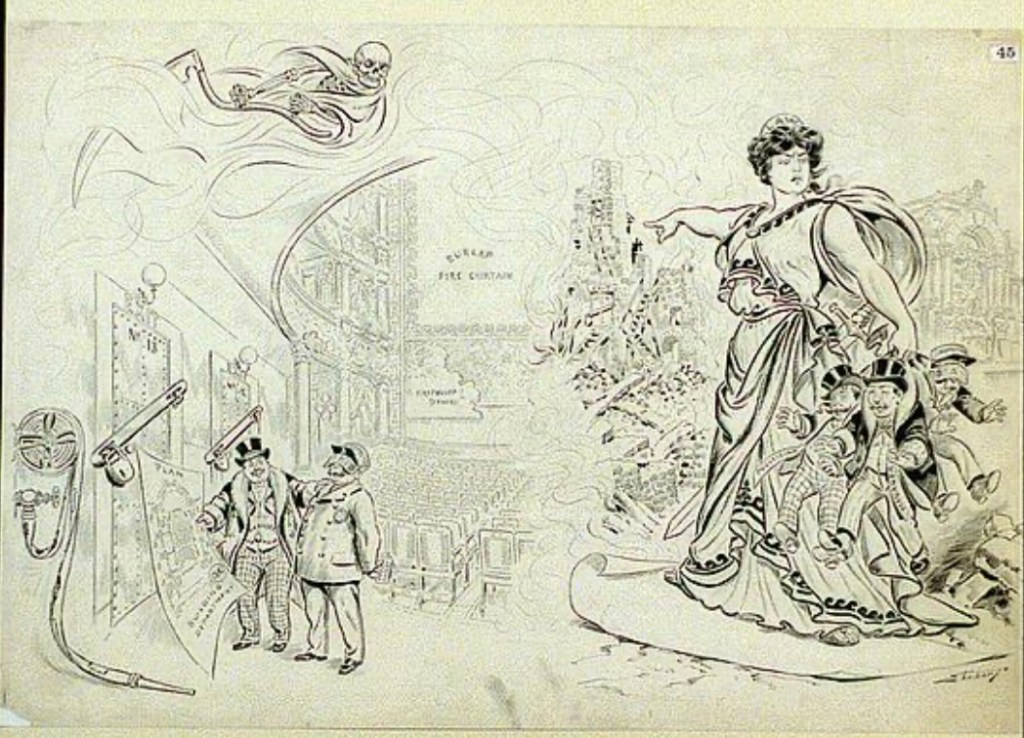
S. D. Ehrhart, “Iroquois Theatre fire,” 1904, published in Puck, c.11 January 1904. Library of Congress, Prints and Photographs Division. No known restrictions on publication.
Everyone Was Responsible. Therefore Nobody Was.
The aftermath produced anger almost immediately.
Theatre owners and managers, the architect and city officials all came under investigation. Manager Will J. Davis was among those caught up in the legal proceedings, while Chicago mayor Carter Harrison Jr. and other officials also faced accusations or charges during the various investigations that followed.
But responsibility became extraordinarily difficult to pin on any single person.
There had been too many failures.
The building.
The inspections.
The doors.
The exits.
The curtain.
The scenery.
The fire precautions.
The management.
Smithsonian describes the resulting problem rather neatly: culpability became an almost impossible web because so many different people had failed in different ways.
The result was depressingly familiar.
There was plenty of blame.
Far less individual accountability.
Provenance: Gate shut across a stairwell in the Iroquois Theater after the fire, January 1904. Chicago Daily News collection, Chicago History Museum, DN-0001694. No Known Copyright.
What Changed
Something did change, however.
Within days Chicago closed its theatres for inspection and improvement. Other American cities began examining their own venues, and Chicago introduced stricter rules governing exits, aisles, occupancy, fire alarms, scenery, sprinklers and emergency lighting.
The disaster also formed part of the history that eventually produced the panic bar — the wonderfully simple device that allows an emergency door to be opened merely by pushing against it.
No complicated catch.
No unfamiliar handle.
Just push and get out.
And then there is the safety curtain.
That irritating thing.
The one that descends before the performance.
And rises.
And occasionally descends again.
It is being tested because, on a December afternoon in Chicago in 1903, one failed to do the job for which it existed.
More than six hundred people discovered what happens when theatre safety becomes something assumed rather than something demonstrated.
So the next time I am sitting there, programme in hand, watching a curtain travel slowly towards the stage floor while wondering when the show is actually going to start, I shall probably think differently.
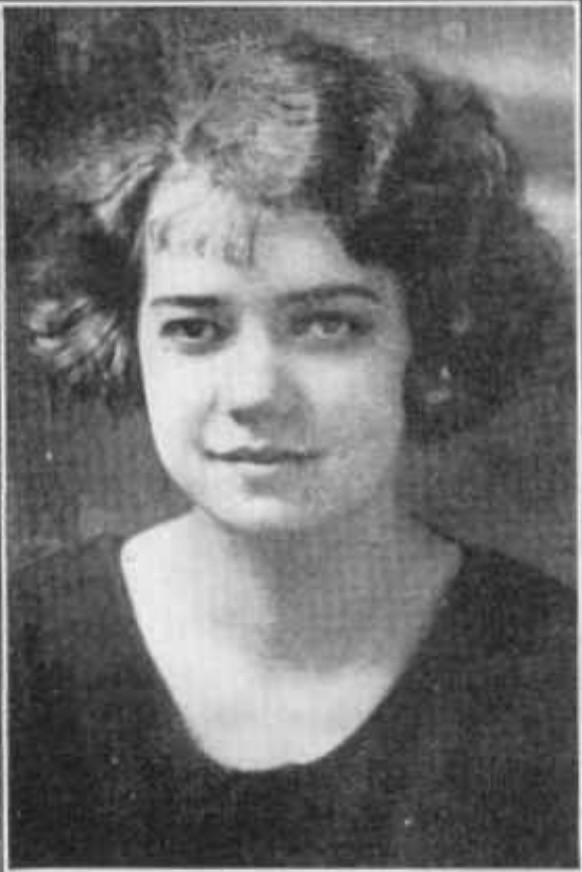
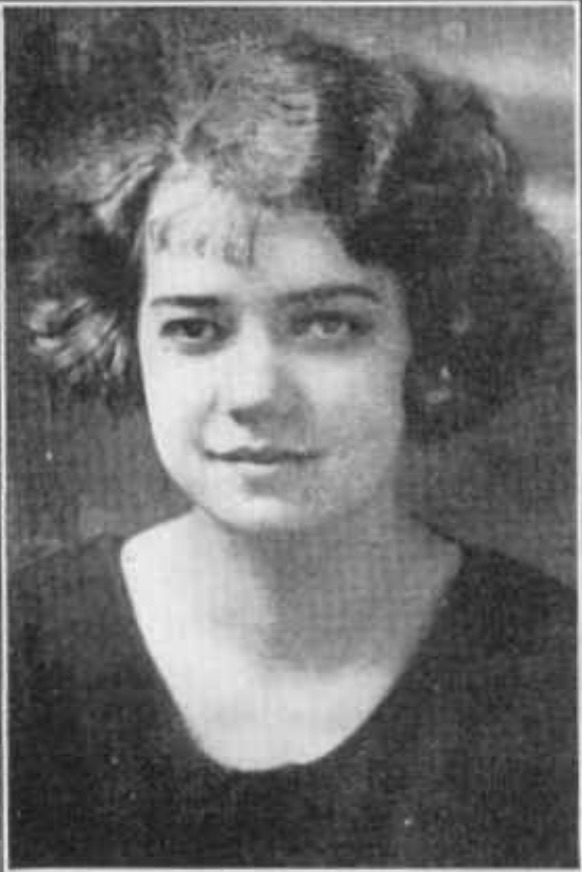
Hazel Iva Weatherby, third- and fourth-grade teacher at Bath Consolidated School. She was 20 years old. Image via National Teachers Hall of Fame.
On the morning of 18 May 1927, the children of Bath, Michigan, went to school.
It was a Wednesday.
Bath was a small farming community, the kind of place built from fields, family names and familiar faces. There was a grain elevator and a small drugstore. People knew their neighbours, and most people knew the children who travelled each morning from the surrounding countryside to the consolidated school.
The school itself represented something important.
For years, Bath Township had debated whether its children should continue to attend scattered one-room schools or whether they should be brought together beneath one roof. In 1922, voters finally approved a consolidated school serving grades one through twelve.
It was not an insignificant decision. Around 300 local landowners would pay higher property taxes to finance it.
But the school represented investment, opportunity and progress.
When it opened, 236 pupils were enrolled from across the district.
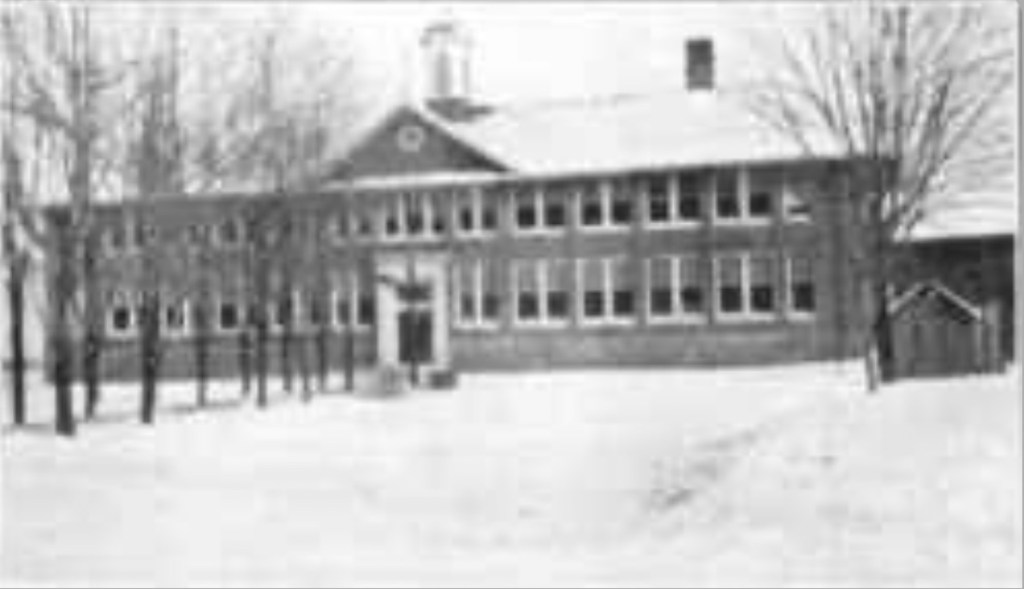
Bath Consolidated School before 18 May 1927. Image via Find a Grave.
By the spring of 1927, it was simply part of Bath.
Children came through its doors each morning. Teachers prepared lessons. Parents expected their sons and daughters home later in the day.
Among the teachers was Hazel Iva Weatherby.
Hazel Iva Weatherby, third- and fourth-grade teacher at Bath Consolidated School. Image via National Teachers Hall of Fame.
Hazel was only twenty years old.
Born on 20 September 1906, she was in the first year of what should have become a long teaching career. Her classroom contained the third- and fourth-grade children.
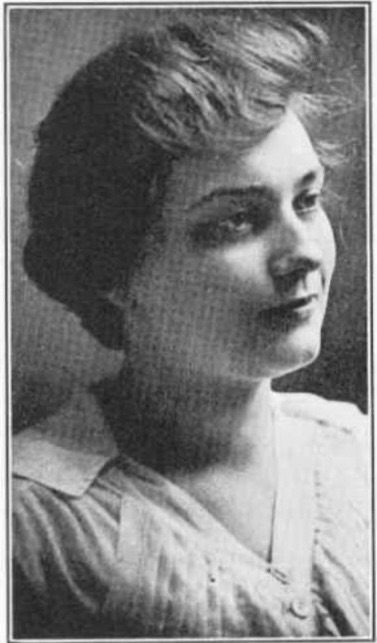
Nearby was Blanche Elizabeth Harte, who taught the fifth grade.
Blanche Elizabeth Harte, fifth-grade teacher at Bath Consolidated School. Image via National Teachers Hall of Fame.
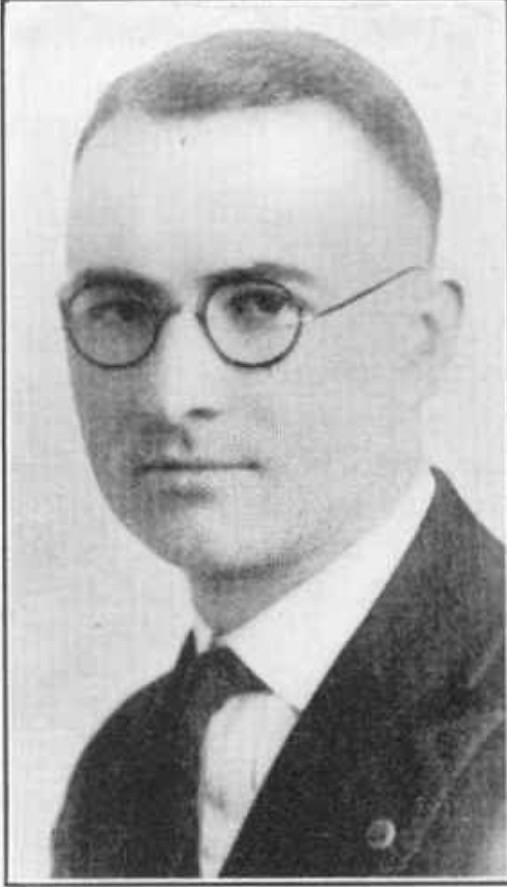
The school was headed by Emory E. Huyck, its superintendent.
Emory E. Huyck, superintendent of Bath Consolidated School. Image via National Teachers Hall of Fame.
Together, their photographs are striking for their ordinariness.
They do not look like people who belong to a disaster.
They look like schoolteachers.
And that is precisely the point.
Fifteen minutes
School began at 8:30 that morning.
Children were settling into classrooms, preparing lessons and beginning what appeared to be an entirely ordinary Wednesday.
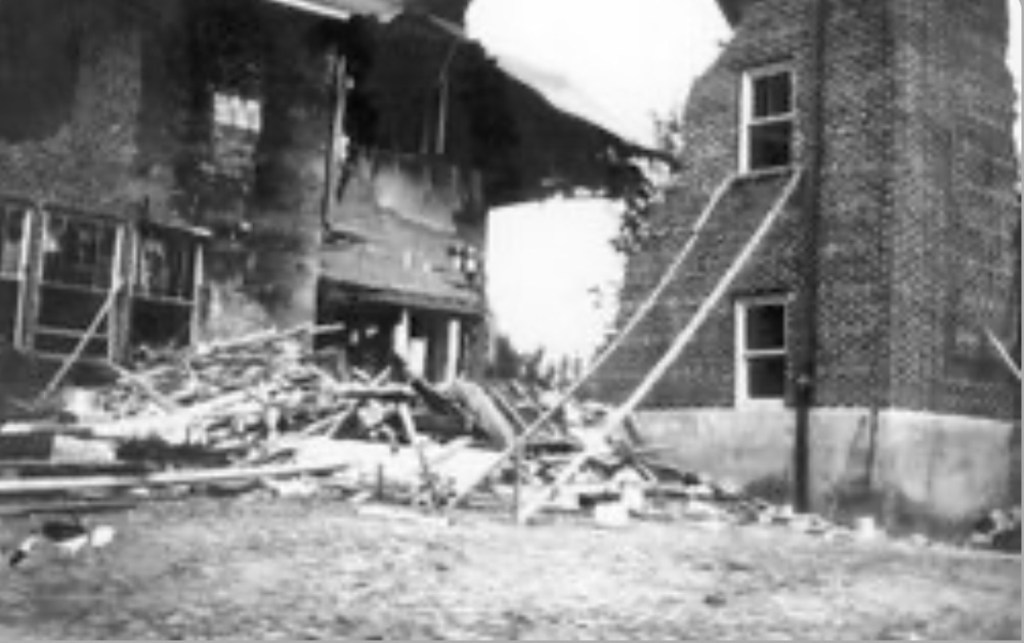
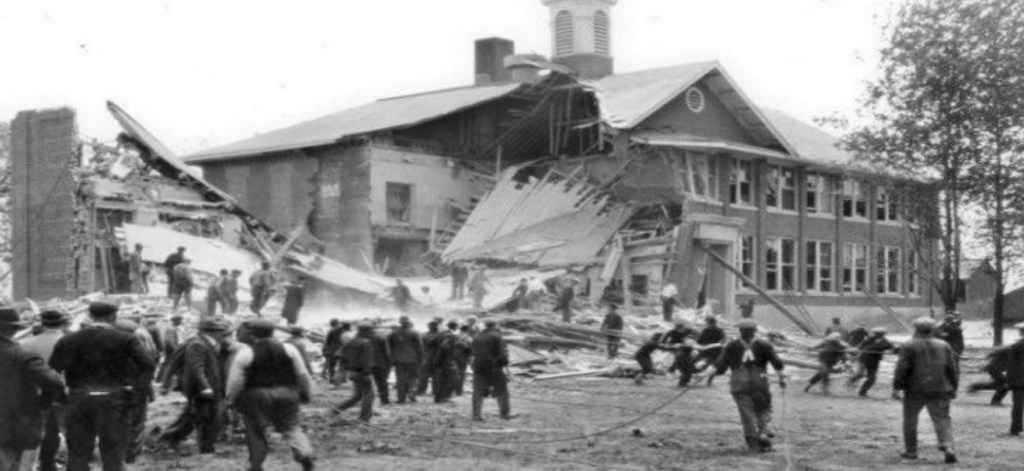
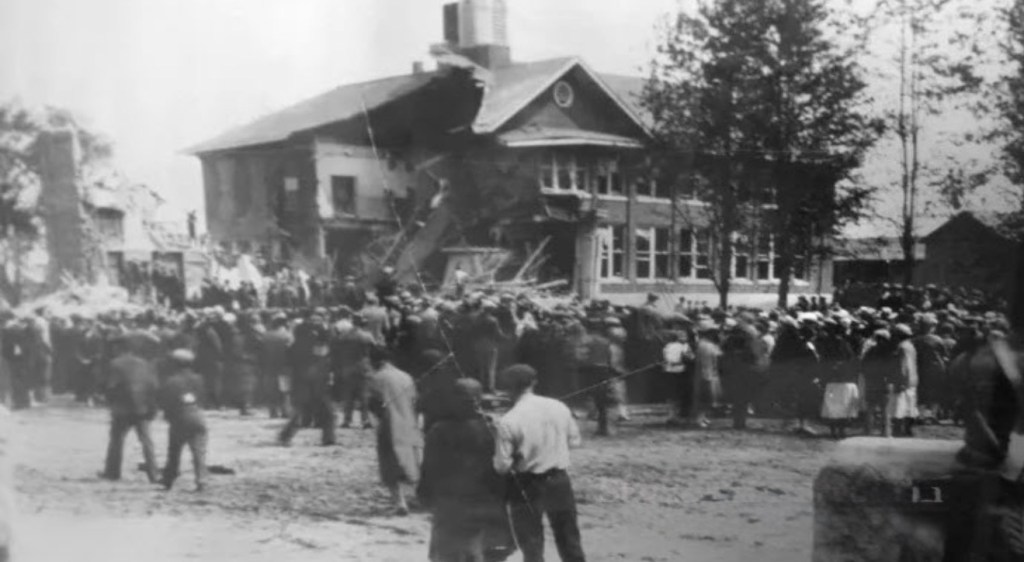
At approximately 8:45, explosives beneath the north wing detonated, destroying much of the northwest section of the school.
The blast tore through the school and caused a large part of the structure to collapse.
Desks disappeared beneath timber and brick. Floors gave way. Children and teachers were buried beneath debris.
The damaged Bath Consolidated School following the explosion of 18 May 1927. Image via Find a Grave.
The cause had been deliberate.
Andrew Kehoe, a local farmer who also served as treasurer of the school board, had concealed explosives beneath the building. He had developed deep grievances connected with his finances, local taxation and the school.
That is necessary to know.
But it is not where this story belongs.
Because within moments of the explosion, something else happened.
Bath ran towards the school.
Image via Devastating Disasters.
The people who came running
The sound carried across the community.
Parents came.
Neighbours came.
Farmers came.
People from nearby communities came.
There was no carefully prepared emergency response waiting outside the gates. There were simply people confronted by the sight of their school torn apart and children trapped inside it.
They began to dig.
Hands moved bricks.
Timbers were lifted.
The injured were carried away from the wreckage.
Parents searched for children.
Neighbours searched for other people’s children.
The Bath School Museum describes mothers, fathers, friends and families all helping one another through the destruction.
Image via Lansing State Journal.
For a small community, there could have been few sights more terrible.
This was not some distant institution.
These were familiar faces beneath the rubble.
The first catastrophe had barely begun to be understood when there was another.
Kehoe arrived near the school in a vehicle containing explosives. Superintendent Emory Huyck, who had survived the destruction of his school, was among those killed when the vehicle exploded.
By the end of the disaster, the death toll would reach 45, including the perpetrator. Thirty-eight of the dead were children.
The figure is almost impossible to absorb.
Thirty-eight children from one small community.
Two teachers.
A superintendent.
Other adults who happened to be there.
But numbers alone tell us surprisingly little.
Names do more.
Hazel
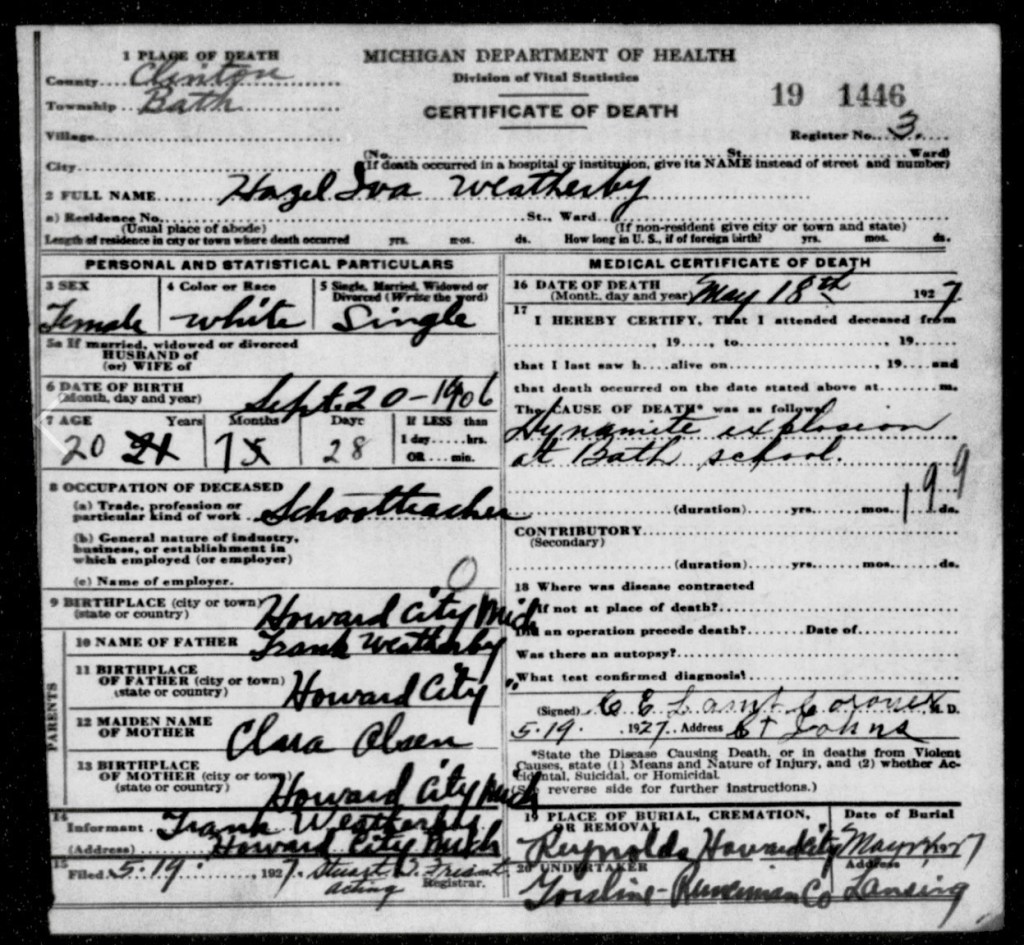
Hazel Weatherby died in the ruins of her classroom.
Her death certificate is an extraordinarily stark object.
The death certificate of Hazel Iva Weatherby. Image via Find a Grave.
It records a name.
An occupation: schoolteacher.
An age: twenty.
A date: 18 May 1927.
Official records have a way of compressing whole lives into boxes.
Yet Hazel’s life had only just begun to move beyond those boxes.
She was a young teacher at the beginning of her profession, responsible each morning for children perhaps eight, nine or ten years old.
Accounts published after the disaster described her as having tried to protect children when the building came down.
Her funeral took place back in her home community.
The crowd was reportedly too large for Amble Methodist Church, and contemporary coverage described around 150 cars following the cortege.
Her grave would later carry a remarkable inscription:
Martyred Teacher of Bath.
The words belong to another era, but the sentiment is clear.
Her community did not remember her simply as someone who happened to die in a school.
They remembered what she had been doing when disaster arrived.
She had been their teacher.
Blanche
Blanche Elizabeth Harte was another of the teachers lost that morning.
She taught fifth grade.
Her presence in the story matters because Bath should not become a tale constructed around a single heroic figure.
It was a school.
It was filled with adults whose job was to educate and care for children.
Blanche was one of them.
And among the material preserved from the disaster is one of the smallest objects imaginable.
A glass vase.
Michigan State University’s historical collection records it as a small glass vase given to Blanche Harte in 1926.
It survived the bombing.
There is something almost absurd about that.
A school could be torn open.
Brick walls could fall.
Human lives could disappear within seconds.
And a little glass vase could survive.
History sometimes preserves the wrong things.
Or perhaps it preserves exactly the things we need.
What might have happened
After the explosion, investigators entered what remained of the building.
Beneath the south wing, they discovered another large quantity of explosives.
They had not detonated.
The surviving section of the school therefore carried within it another possible version of that morning.
One in which still more classrooms disappeared.
Still more children died.
Still more families waited for names.
That unrealised catastrophe makes the actual loss no less terrible, but it shows how much worse the day had been intended to become.
The south wing remained standing.
So did the school cupola.
And Bath, somehow, remained too.
Sheets for bandages
This may be the detail that says most about the community.
In the hours after the bombing, medical supplies were needed urgently.
Families used what they had.
Household linen was torn into strips for bandages.
Other communities began sending food, bedding and supplies.
It is such a domestic image.
Someone opening a cupboard.
Taking out sheets that might have belonged to a spare bed or a child’s room.
Tearing them apart because somewhere nearby another child was bleeding.
Large disasters are often described through large language.
Devastation.
Catastrophe.
Mass casualties.
But communities usually respond through much smaller actions.
Someone carries water.
Someone gives a blanket.
Someone moves a brick.
Someone tears up a bedsheet.
Someone stays beside an injured child whose parents have not yet arrived.
And gradually those individual actions become the response of an entire place.
The names
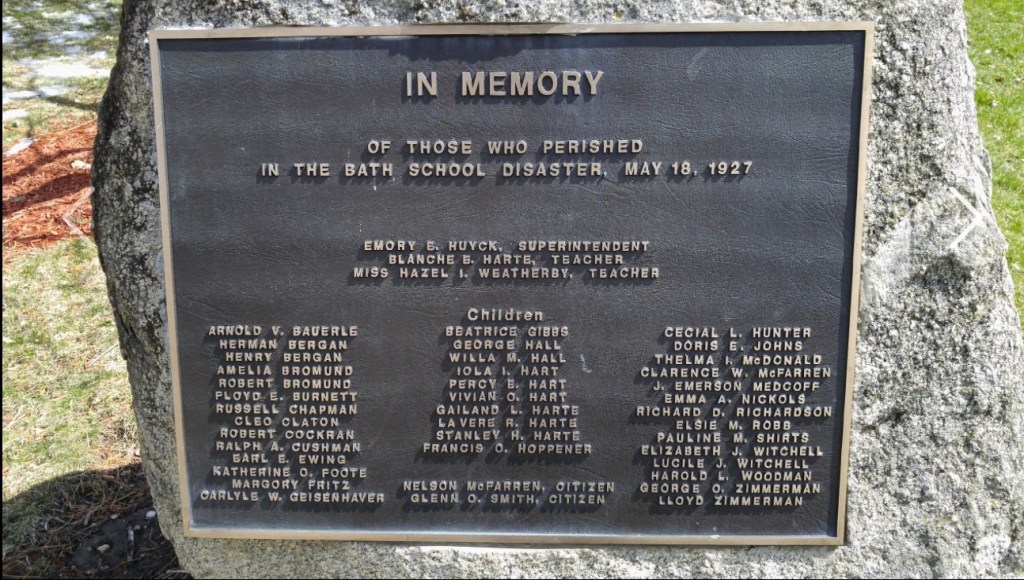
Memorial to those who died in the Bath School disaster. Image via Find a Grave.
The memorial plaque does something that casualty figures cannot.
It returns the dead their names.
At the top are the school staff:
Emory E. Huyck, Superintendent Blanche E. Harte, Teacher Miss Hazel I. Weatherby, Teacher
Below them are the children.
Arnold.
Herman.
Henry.
Amelia.
Robert.
Floyd.
Russell.
Cleo.
And the names continue.
Different families appear repeatedly.
Bergan.
Bromund.
Hart.
Harte.
McFarren.
Witchell.
Zimmerman.
This was not simply a collection of unrelated victims who happened to be in the same building.
These were neighbours.
Brothers and sisters.
Cousins.
Classmates.
Children whose families would continue to meet one another in shops, churches, roads and fields long after the funerals had ended.
That is what the word community means in a disaster.
The grief cannot be neatly divided.
Everyone carries some part of someone else’s loss.
Rebuilding Bath
It would have been understandable if the destruction of the school had become the final chapter.
Instead, Bath rebuilt.
Money and assistance came from outside the community, including support associated with Michigan senator James Couzens.
A replacement school was constructed.
Children returned to education.
Teachers returned to classrooms.
Life did not become what it had been on the morning of 18 May.
It could not.
But life continued.
And that may be the most important distinction.
Recovery does not mean forgetting.
Rebuilding does not mean restoring what existed before.
Sometimes rebuilding simply means deciding that destruction will not be allowed to have the last word.
What remained
Decades later, survivors were interviewed.
Michigan State University’s historical collections preserve their voices and transcripts.
They also preserve objects.
A chair recovered from the school.
A dictionary.
A crutch used by an injured pupil.
The glass vase belonging to Blanche Harte.
Each one is almost painfully ordinary.
But perhaps ordinary things are the best witnesses.
They remind us that before the explosion there had been classrooms.
Words being looked up in dictionaries.
Children sitting on chairs.
Teachers receiving small gifts.
School days beginning at half past eight.
There was nothing inevitable about what happened next.
That morning only became historic because ordinary life was interrupted.
A century later
Bath continues to remember.
The surviving cupola became part of the memorial landscape. The Bath School Museum preserves the history of the school, the disaster and the people whose lives were changed by it.
And perhaps that is where the story properly ends.
Not with Andrew Kehoe.
His actions caused the disaster, but they do not need to own its memory.
Bath belongs to the teachers whose photographs survive.
To Hazel Weatherby, twenty years old and standing at the beginning of her career.
To Blanche Harte and her fifth-grade classroom.
To Emory Huyck and the school he helped lead.
To the children whose names remain on the memorial.
To the people who ran towards a ruined building.
To the families who opened cupboards and sacrificed their sheets for bandages.
To those who buried children and then somehow found the strength to build another school.
The explosion lasted moments.
The response lasted generations.
And sometimes history survives not in the thing that was destroyed, but in what remained afterwards.
A chair.
A dictionary.
A child’s crutch.
A list of names.
And a little glass vase, given to a teacher in 1926, that should have been shattered on the morning of 18 May 1927.
There are photographs of the First World War that show generals, ruined towns, artillery pieces and great moments of history.
And then there are photographs like this.
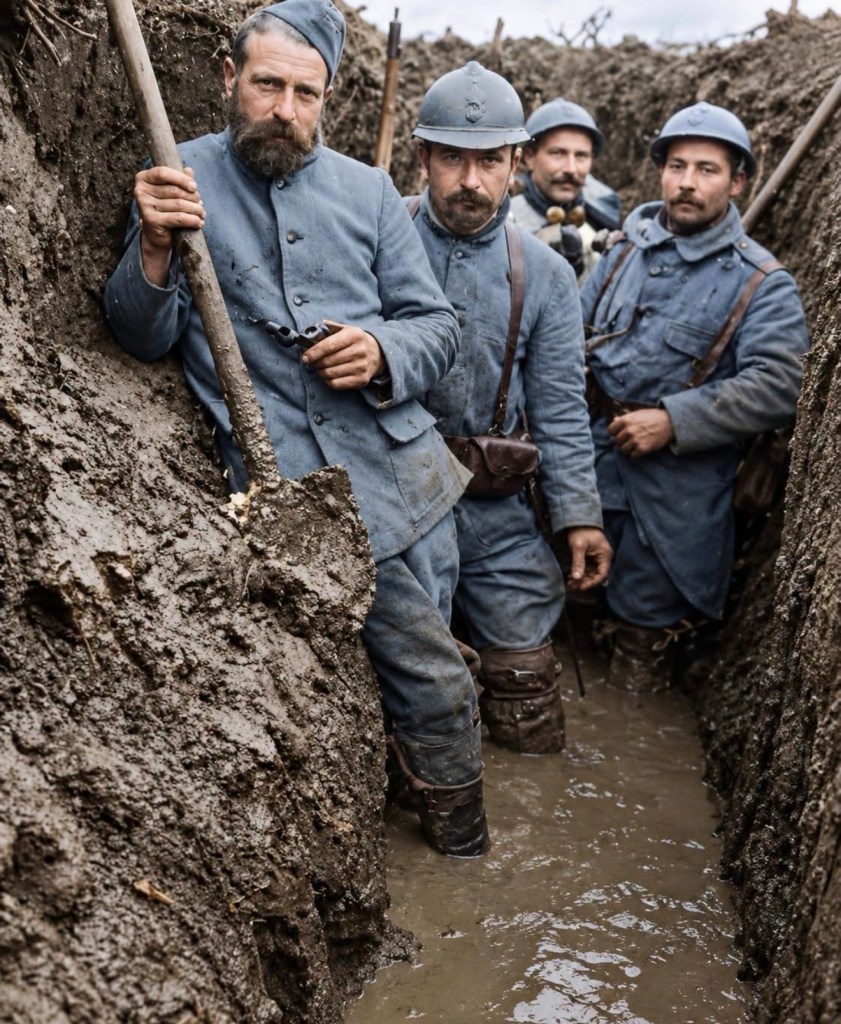
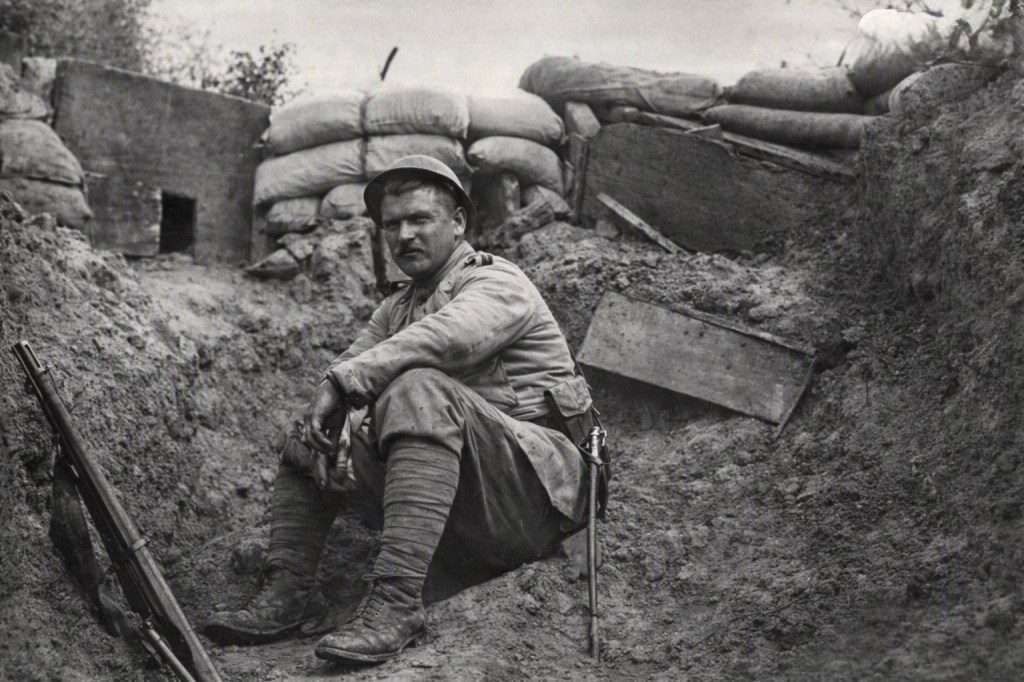
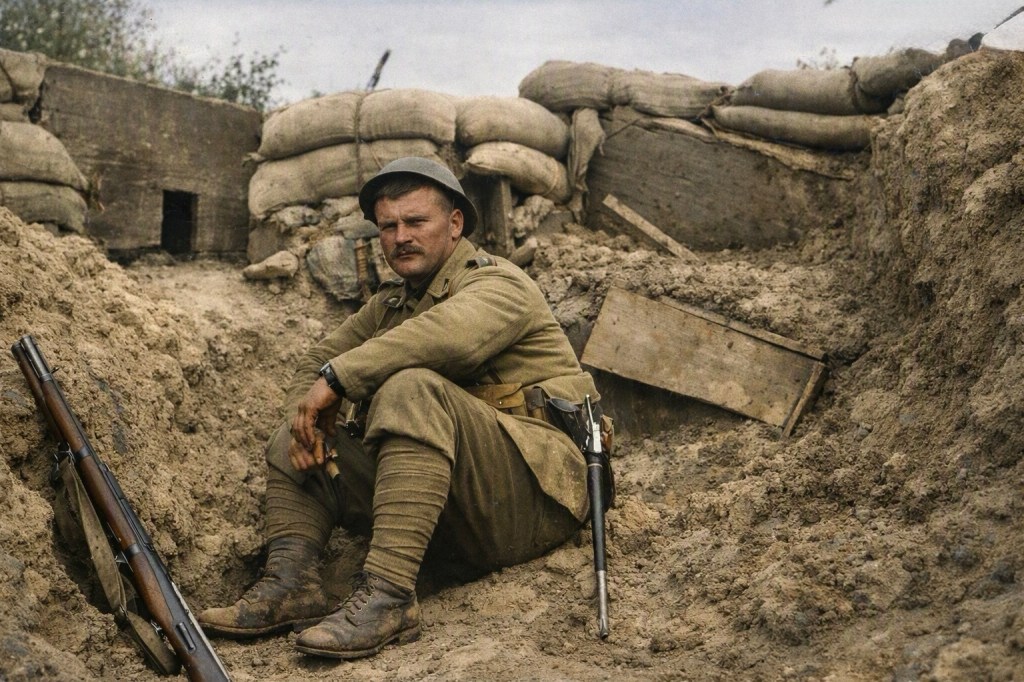
Four French soldiers stand in a trench filled with brown water. The mud has climbed the walls, collected around their boots and turned the narrow passage into something closer to a ditch or stream. One man holds a shovel. Another looks directly towards the camera. Behind them are rifles, equipment, earth and the endlessly repeated practical work of keeping a trench usable.
There is no dramatic attack taking place.
That may be exactly why the photograph is so powerful.
By 1915 the Western Front had settled into a vast network of trenches stretching from the North Sea towards Switzerland. The great movements of the opening months of the war had given way, in many sectors, to something very different: men living for days at a time below ground level, surrounded by earth, water and timber.
Rain could transform these positions remarkably quickly.
Water gathered in the bottom of trenches. Walls collapsed. Duckboards shifted or disappeared beneath the mud. Dugouts required repair. Drainage channels had to be cleared and new trenches continually dug, strengthened and maintained.
All of this continued while the men remained within range of artillery, snipers and raids.
The enemy was not always standing on the other side of No Man’s Land.
Sometimes the enemy was simply water.
Wet clothing, cold feet, lice, rats, exhaustion and infection became part of trench warfare. The physical strain was accompanied by the psychological effect of living in cramped, uncomfortable surroundings where danger might arrive suddenly and without warning.
The French infantryman increasingly became known by one enduring name:
the poilu.
The word is often explained literally as “hairy one”, giving rise to the image of the unshaven, moustachioed soldier emerging from the trenches.
But the expression was older than the First World War. It already carried ideas of toughness, courage and masculine endurance. During 1914–18 it became inseparable from the ordinary French soldier himself.
The men in this photograph also illustrate another transformation taking place within the French Army.
The conspicuous uniforms of 1914 were being replaced by horizon blue, while the distinctive Adrian helmet began appearing during 1915. The helmet was never intended to make its wearer invulnerable to bullets. Its principal purpose was protection from shell fragments and debris falling from above.
It became one of the defining images of the French soldier of the Great War.
Yet perhaps the most interesting thing about this photograph is what we do not know.
The men appear to be anonymous.
No familiar names. No celebrated officers. No heroic caption describing an important battlefield achievement.
Just four soldiers standing in water.
And behind them were millions of others whose war consisted not only of attacks and bombardments, but of carrying, repairing, digging, waiting, eating, sleeping and attempting to remain dry in landscapes that sometimes seemed determined to swallow them.
That is worth remembering when we encounter a single military record.
A name such as Claude Gressard, for example, can eventually lead us towards a regiment, a family, a village and the place where a life ended. But military paperwork rarely describes the enormous amount of ordinary existence that occurred between those recorded moments.
Claude served later in the war, but the world shown in this photograph remained part of the world of the French infantryman: earthworks, equipment, weather, fatigue and innumerable practical tasks undertaken far from the great narratives written afterwards.
History often records the battle.
Photographs such as this remind us of the living that had to be done between the battles.
And sometimes that meant standing knee-deep in mud with a shovel.
A Spaniard, a Swiss hotelkeeper, and the question of becoming British
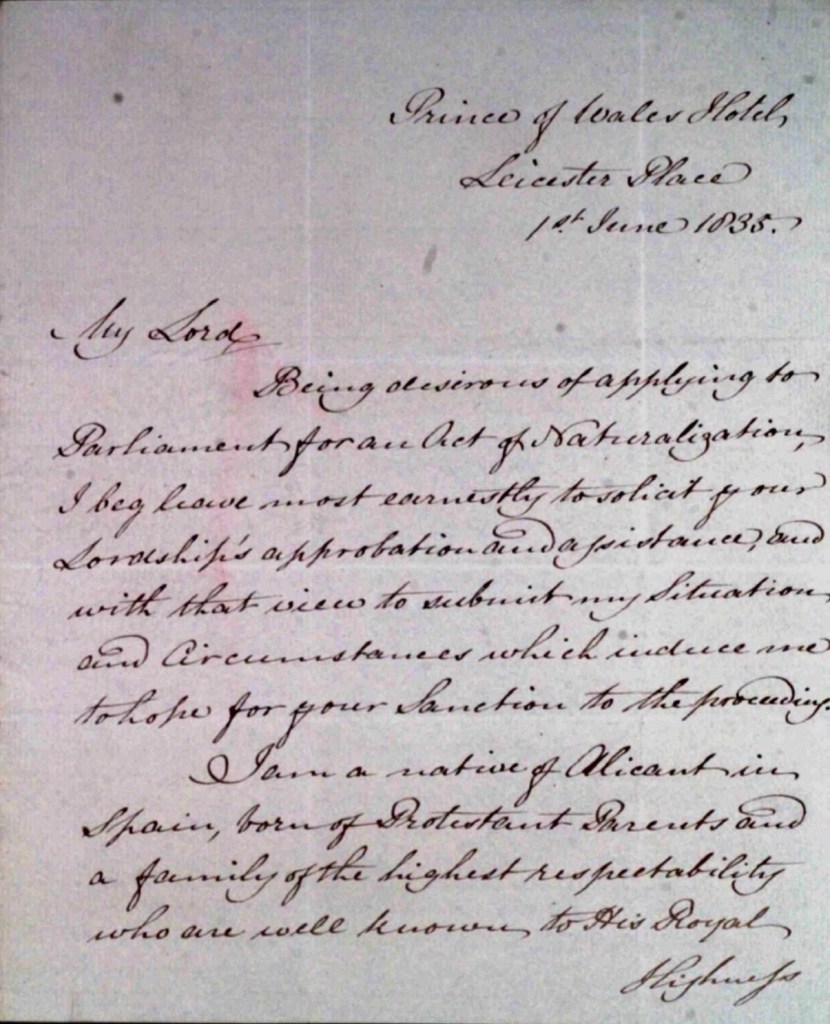
On 1 June 1835, a man sitting in the Prince of Wales Hotel in Leicester Place, just off Leicester Square, began a letter.
“My Lord,
Being desirous of applying to Parliament for an Act of Naturalization…”
His name was Baron de Arabet.
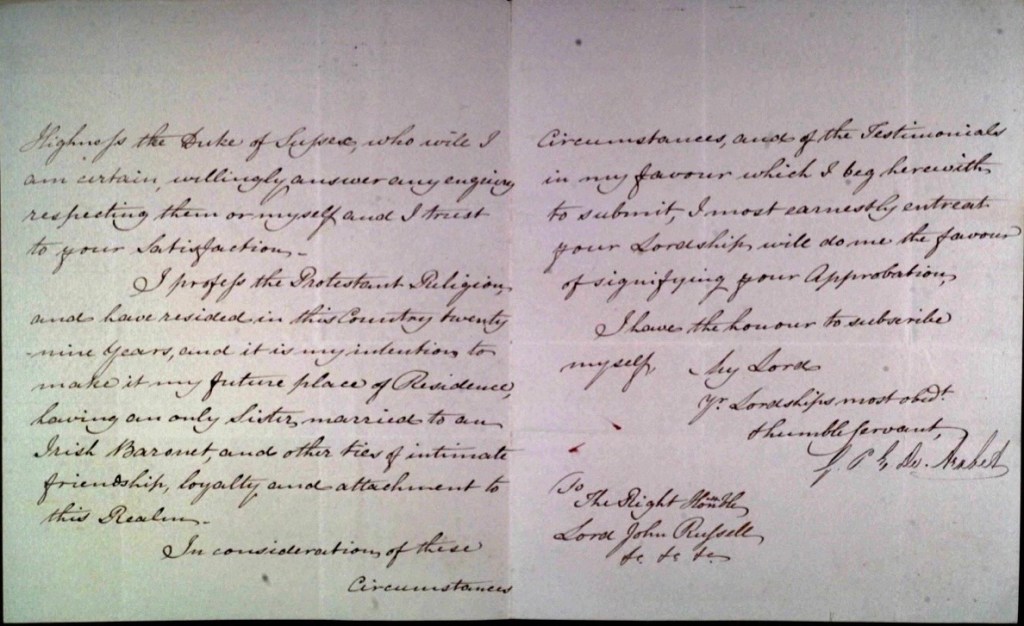
He had been born in Alicante in Spain, but according to the letter he had already lived in Britain for twenty-nine years. Britain was no temporary refuge. He intended, he told Lord John Russell, to make it his permanent home.
Yet after nearly three decades in the country, De Arabet was still legally a foreigner.
He wanted to become British.
Twenty-nine years in Britain
De Arabet’s petition, preserved today among the Home Office papers at The National Archives, gives us tantalising fragments of the life behind the application.
He described himself as:
“a native of Alicante in Spain, born of Protestant Parents and a family of the highest respectability…”
If his statement that he had lived in Britain for twenty-nine years was exact, he had arrived around 1806, while Britain and Napoleonic France were at war.
Why he came remains unclear.
But by 1835 his connections with Britain were considerable.
His only sister, he wrote, was married to an Irish baronet. He had formed “ties of intimate friendship, loyalty and attachment to this Realm.”
And then came the name that must have carried considerable weight.
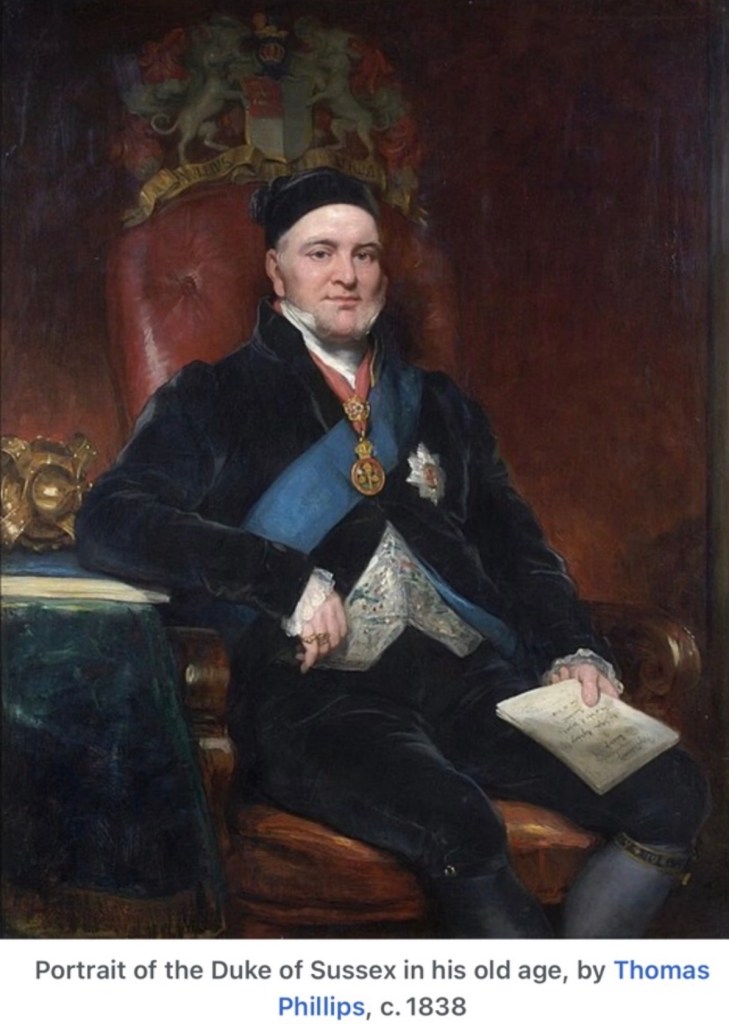
His family, De Arabet claimed, was well known to Prince Augustus Frederick, Duke of Sussex.
This was not simply an impressive acquaintance. The Duke was a son of George III, brother of King William IV and uncle of the future Queen Victoria.
De Arabet was effectively telling the authorities: if you wish to know who I am, ask a member of the Royal Family.
He also emphasised his Protestant faith.
Taken together, the letter feels almost like a carefully assembled portrait of belonging: long residence, family connections, religion, loyalty, respectability and powerful people prepared to vouch for him.
But there is another story hiding at the very top of his letter.
His address.
The Prince of Wales Hotel
De Arabet wrote from the Prince of Wales Hotel, Leicester Place.
At first it looks like nothing more than an address.
Then the directories begin talking.
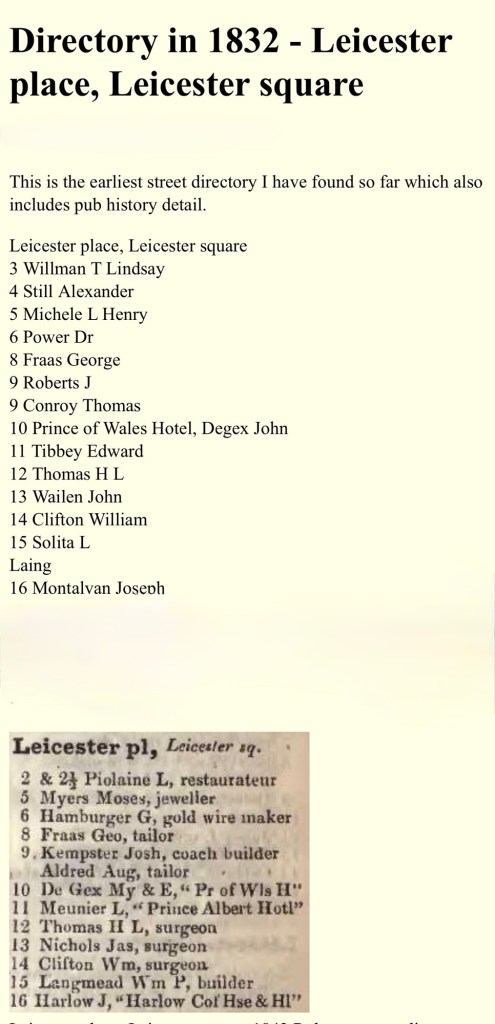
An 1805 directory records Curt & Degex operating the Prince of Wales Coffee House and Hotel. By 1811, John Degex appears in connection with the Prince of Wales Hotel.
The association continued.
In 1829 a directory lists:
“Degex John, Prince of Wales’s Hotel, Leicester place.”
In 1832 the establishment appears at 10 Leicester Place, and John De Gex remains associated with it in directories through the 1830s.
So when Baron de Arabet sat there writing his petition in June 1835, he was staying at an establishment which had already been associated with the De Gex family for around thirty years.
And the De Gex family had an immigrant story of their own.
John Francis De Gex
The hotelkeeper was John Francis De Gex, commonly known simply as John De Gex.
His family was of Swiss origin and had settled in England around the beginning of the nineteenth century.
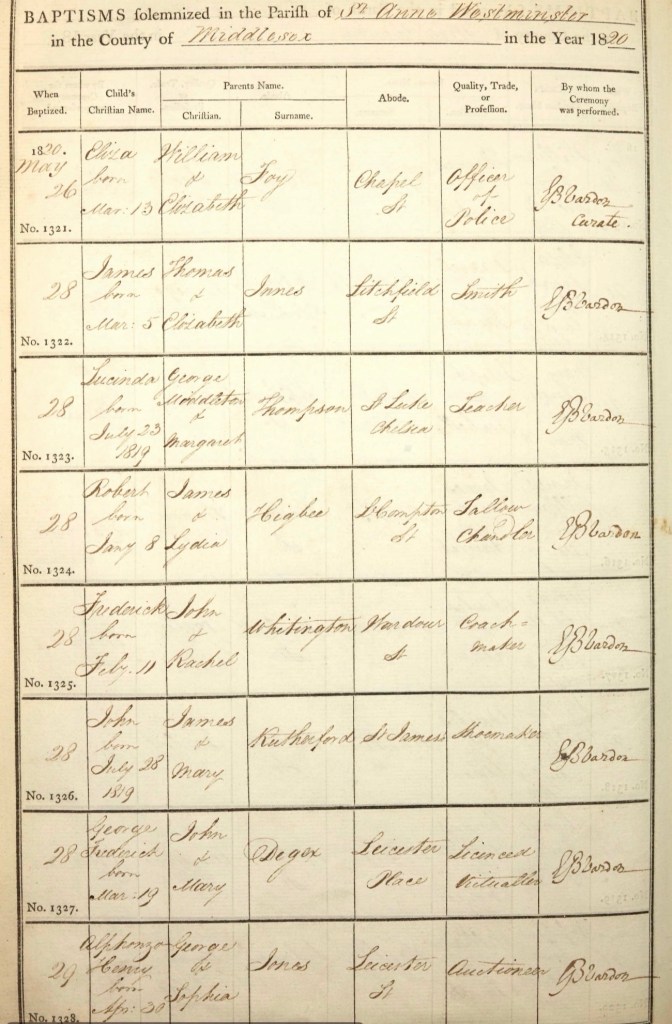
A baptism register from St Anne, Westminster, provides a wonderful glimpse inside the household.
On 28 May 1820, George Frederick De Gex, born on 19 March, was baptised. His parents were recorded as John and Mary De Gex, their abode as Leicester Place, and John’s occupation as:
Licensed Victualler.
It ties the family firmly to both the street and the hospitality trade.
Another of their children would become considerably better known.
Their eldest son, Sir John Peter De Gex, born in 1809, became a barrister and distinguished law reporter. He entered Lincoln’s Inn in 1831 and was called to the bar in January 1835 — just months before Baron de Arabet wrote his letter from the family hotel.
John Francis De Gex made his will in December 1837. It identifies him with Leicester Place and names his wife Mary.
After his death, the De Gex connection with the hotel continued. By 1843, Mrs Mary Degex appears in a directory at the Prince of Wales Hotel.
By 1848, however, the proprietor listed there was Henry Bingham.
The De Gex era was coming to an end.
Two immigrant stories at one address
There is no evidence, at least so far, that Baron de Arabet chose the Prince of Wales Hotel because its proprietor was himself from an immigrant family.
Nor do we know whether De Arabet and John De Gex were friends.
It would be tempting to join those dots, but the surviving records do not allow us to.
What they do give us is something rather better.
For a brief moment in 1835, two stories intersected at 10 Leicester Place.
One belonged to a Spanish-born Protestant who had spent almost thirty years living in Britain and was now asking Parliament formally to make him British.
The other belonged to a Swiss immigrant family who had already established a business, raised children in London and become woven into British life.
One of those children would eventually be knighted.
The hotel itself has disappeared.
There appears to be no convenient photograph of the Prince of Wales Hotel waiting for us to discover it. Leicester Place and Leicester Square changed enormously as London developed, and the building that witnessed these events is gone.
But its absence doesn’t quite erase it.
A street directory gives us its number.
A baptism register gives us the family living there.
A will gives us the hotelkeeper’s full name.
And a letter written on 1 June 1835 places Baron de Arabet inside its story.
He ended that letter by asking Lord John Russell to signify his approval of the naturalisation application.
Nearly two centuries later, the address at the top of the page has allowed another story to emerge.
Not simply that of a Baron who wanted to become British.
But of the people and the vanished London hotel he encountered along the way.
Victor Petitbon was born on 8 September 1881 in Monein, in the Basses-Pyrénées.
Before the war, he was a tinsmith. His wife, Marcelle — often called Marceline — ran the Café Boy in the rue du Commerce. They had two sons: Émile, known as Millette, and Charles, known as Charlot.
In 1914, Victor was mobilised as a corporal in the 34th Infantry Regiment, 1st Company, 2nd Section.
What survives of his war is not a diary, nor a memoir written decades later.
It is a trail of postcards.
Thirty-one of them survive, sent between September 1914 and March 1918. Through them Victor kept a line open to home: to his wife, to his children, and to the ordinary life he had been pulled away from.
September 1914: wounded and sent south
Victor was wounded in September 1914 and evacuated away from the fighting.
On 9 September he wrote that he had arrived in Bayonne, having travelled via Narbonne and Bordeaux, and that he was waiting to be sent on to Biarritz. Hundreds of wounded men were expected.
He eventually reached the temporary hospital at the Municipal Casino in Biarritz, where he remained for months.
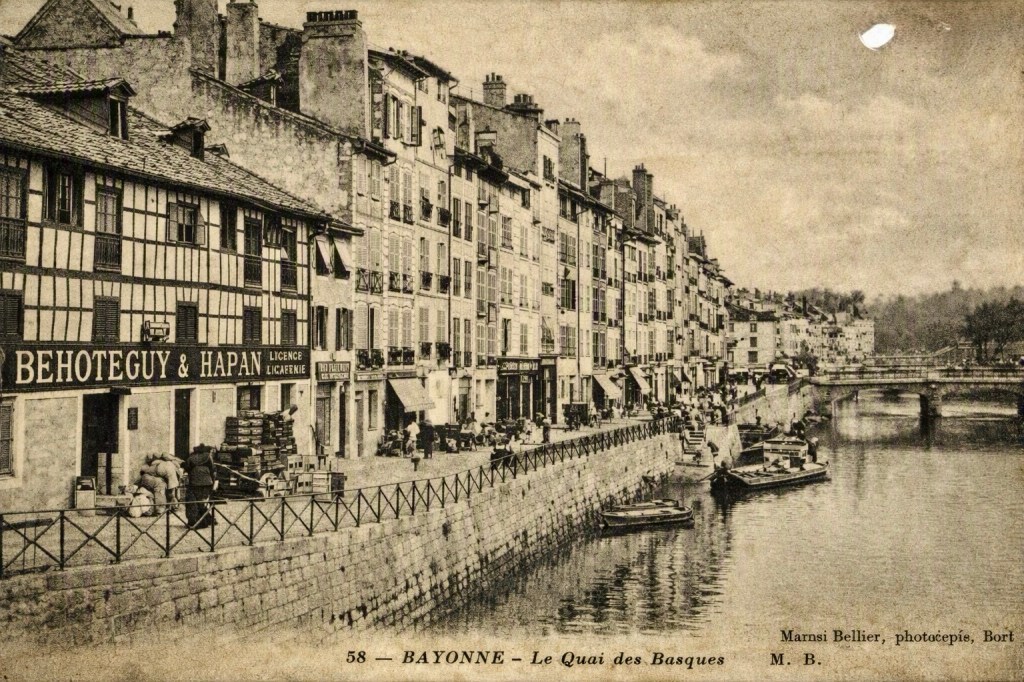
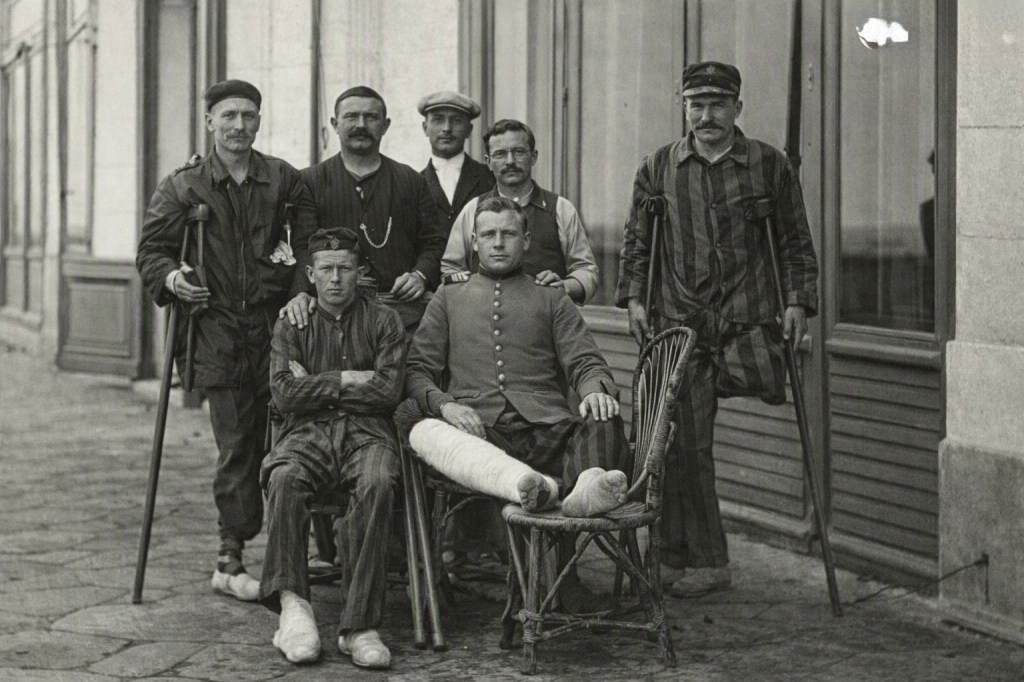
Bayonne – Le Quai des Basques.
Group of wounded and convalescent soldiers.
Victor is standing in the second row, second from the left, identifiable by his watch chain. The crutches, bandaged limbs and seated wounded men show another side of the war: recovery rather than combat.
Victor was still in Biarritz at the end of May 1915.
The surviving correspondence does not explain every detail of this period, however, research suggests that he may have had leave. His second son, Charles, was born on 12 November 1915.
By July 1915, Victor was on the move again, heading east.
Then the surviving correspondence falls silent for almost a year.
1916: back to the trenches
On 7 August 1916 the postcards begin again.
Victor wrote to his “dear little wife” and children and tried to explain trench life.
The image on the card gave them, he said, a glimpse of it — although reality was wetter.
He and his comrades were heading into a large wood. Victor hoped they might find mushrooms.
He had found hazelnuts and was squeezing them between his fingers as he wrote.
At the same time, artillery fire was so heavy that there were moments when the men could barely hear one another.
And then, almost in the same breath, Victor asked about the wine from Pardies and wondered whether he might taste it on leave.
That is one of the most remarkable things about these postcards.
War and ordinary life sit side by side.
Gunfire. Mushrooms. Hazelnuts. Wine. Children.
The front was always present, but so was home.
1917: mud, waiting and the hope of leave
By July 1917 Victor was still at the front.
The cards he sent during this period included views of places such as Gildwiller, Balschwiller and Belfort. Europeana notes that these images were not necessarily the places from which he was writing. Sometimes they were simply cards he had bought on the road and kept to send later.
That makes them all the more interesting.
They are not a photographic diary in the modern sense.
They are fragments collected along the way.
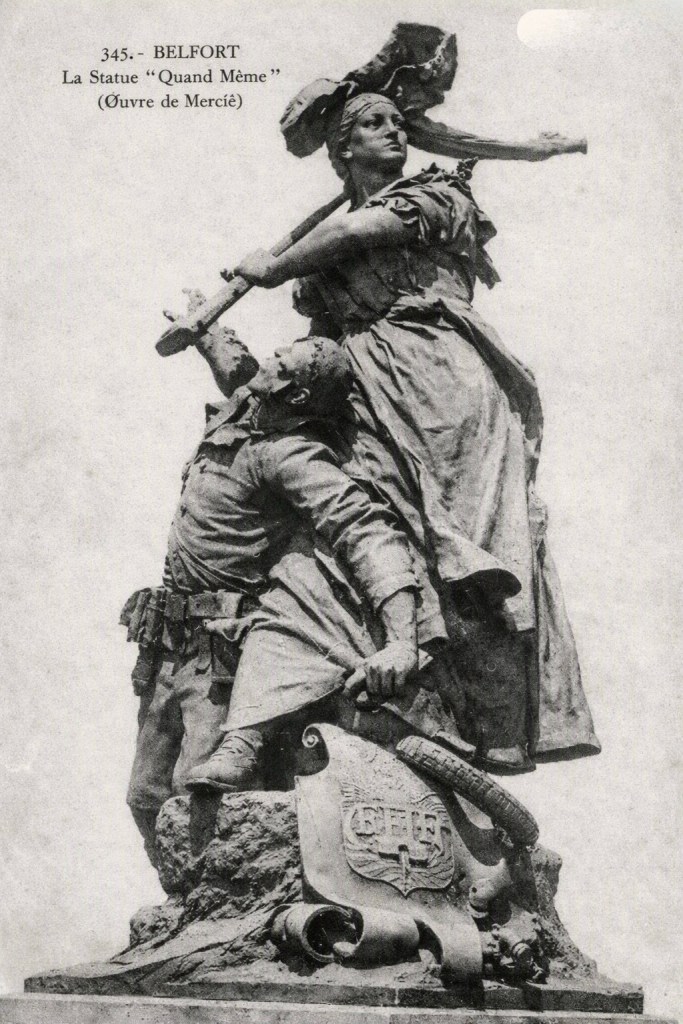
Belfort – “Quand Même” statue.
The postcards Victor sent home often carried patriotic images, even when his own writing was concerned with much smaller and more personal things.
In one card he looked forward to six days of rest. In another he admitted that morale fell sharply when the men knew they had to return to the front.
Again and again, he asked after the children and the vineyard.
On 4 August 1917, after more rain, Victor wrote that they were still wading through mud “like ducks”.
Yet he added that morale remained good and that the troops were fresh.
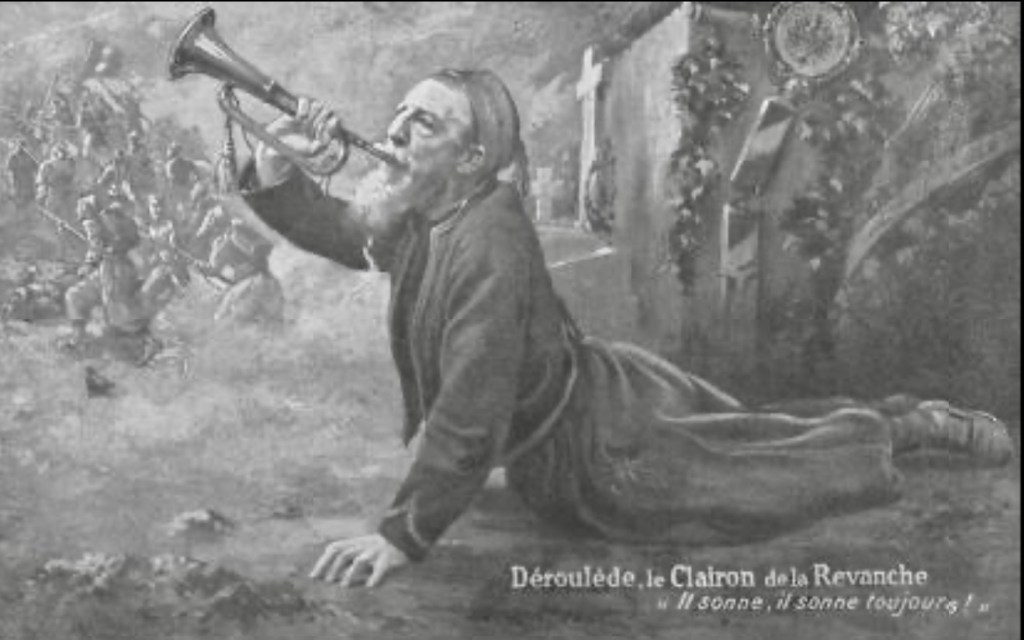
Four days later he sent a postcard showing Paul Déroulède as a Zouave sounding a bugle.
Paul Déroulède – Le Clairon de la Revanche
The patriotic image is almost theatrical.
Victor’s own concerns were much simpler.
He sent the card to Millette and hoped his son would like it.
“My sweetest kisses,” he wrote, “for my three exiles.”
That contrast is worth allowing to stand.
The postcard front speaks of revenge and patriotic spectacle.
The message on the reverse speaks of fatherhood.
By 10 August the tone had worsened.
The weather remained miserable. Victor complained of being wet day and night with nothing dry to change into.
Even from the front, he worried about the harvest at Monein.
“Everything is involved in this war,” he wrote.
It is a small sentence, but an enormous one.
The war was not confined to trenches. It reached vineyards, crops, homes, money, children and waiting wives.
Victor also asked Marceline to keep the postcards carefully.
She did.
More than a century later, we can still read their story.
Waiting to go home
At the end of August, Victor was moved into reserve and given twelve days of rest.
He met men from the regiment that relieved his own and heard them talking about leave.
Victor was heartsick.
His turn had still not come.
He simply wanted to see his children.
At the beginning of September, leave seemed close at last. He asked Marceline to send him money and was plainly embarrassed to have to ask.
On 10 September he was still at the front.
He promised to write every day while travelling, even if he was tired.
And he ended with the sort of sentence that runs through the entire collection:
“Kiss Millette and Charlot and receive, my dear little wife, one million sweet kisses from your husband.”
By 21 September the leave still had not arrived.
Victor imagined Millette meeting him at the station.
He imagined Marceline preparing a good garbure for him.
Then, the next day, the order changed again.
Back to the trenches.
1918: “featherless birds”
The surviving correspondence resumes on 14 March 1918.
Victor sent a postcard connected with the 2nd Aviation Group and wrote:
“My dear Marceline, my dear children, here I am completely in the midst of featherless birds.”
The “birds” were aeroplanes.
2e Groupe d’Aviation
This is perhaps the best final wartime image because it connects directly with Victor’s own phrase and marks the final stage of the surviving correspondence.
Home
Victor Petitbon survived the war.
After demobilisation, he returned to Monein in February 1919.
He went back to his family.
He went back to the Café Boy.
That simple ending matters.
So many wartime collections end with a death notice, a grave, or a name carved into stone.
Victor’s ends with a return.
And perhaps that is why the postcards feel so alive.
They were not written for history.
They were written because a husband missed his wife, because a father missed his children, because a man standing in mud still wanted to know about wine, weather, crops, food and home.
The postcard fronts showed soldiers, monuments, patriotic figures and aircraft.
Victor’s words showed something else.
A man trying, for four years, to remain connected to the life waiting for him.
A railwayman, a war, and the return to ordinary life.
Some records announce themselves dramatically.
Others begin with a number.
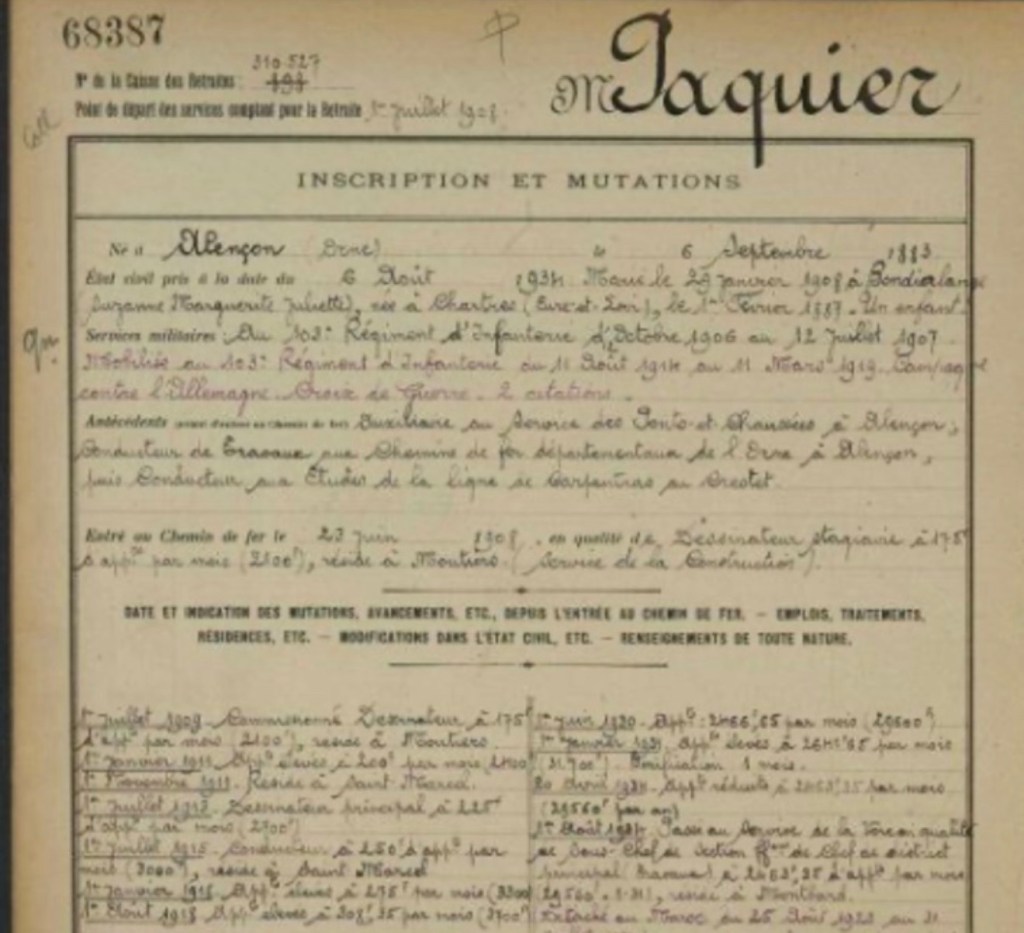
68387.
That was how Marcel Raymond Paquier first appeared: not as a soldier, not as a decorated veteran, and not even particularly as a person, but as an employee in a railway personnel file.
Gradually, however, the bureaucracy begins to give him back his life.
Marcel Raymond Paquier was born at Alençon, Orne, on 6 September 1883.
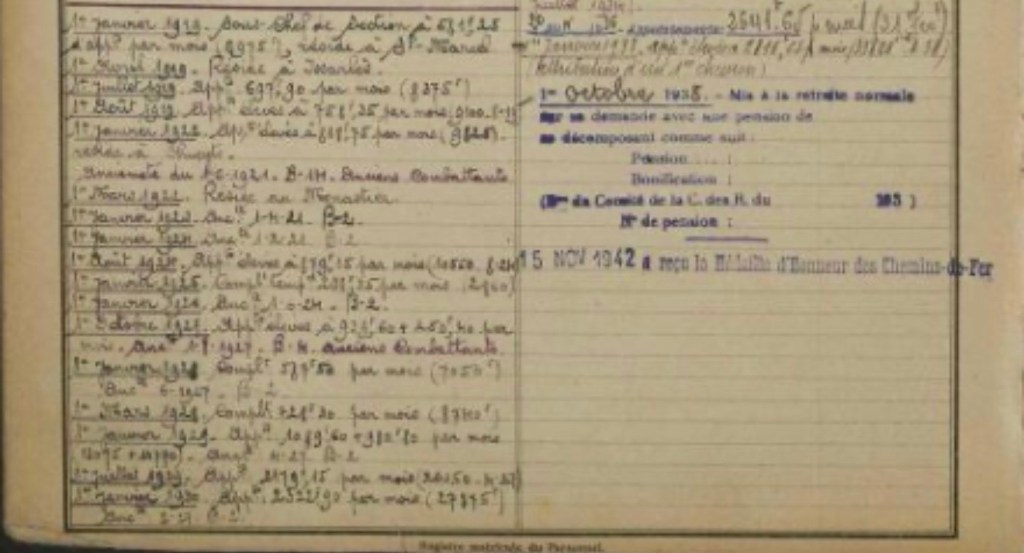
He had a technical background and, after completing military service in 1906–07, entered railway employment on 23 June 1907, apparently as a trainee technical draughtsman in the Construction Service.
What follows is the wonderfully methodical record of a railway career: appointments, promotions, transfers, salaries and allowances.
There are references to places including Saint-Nazaire and Rouen, and his salary steadily increased as his career developed.
On 1 January 1914, shortly before Europe changed completely, his annual salary was recorded at approximately 2,475 francs.
Then the railway record is interrupted by war.
The war
Marcel had already completed his military service before 1914, but in August 1914 he was mobilised again.
He served against Germany during the First World War, associated with the 103e Régiment d’Infanterie, and remained in military service for almost the entire conflict.
Among the brief administrative entries is one fact which suddenly lifts him from the paperwork:
Croix de Guerre — two citations.
Whatever Marcel experienced during those years, he had been recognised twice for his wartime service.
The railway file does not tell us the stories behind those citations.
Perhaps another archive does.
For the moment, the bare statement is enough.
After the war, a note records his return to France in May 1919.
And then something striking happens.
His life becomes ordinary again.
Back to the railway
Marcel returned to railway employment and resumed the career which war had interrupted.
The following years are recorded through the language of administration: changes of grade, transfers, allowances and increasingly higher salaries.
It is not dramatic.
That is precisely why I like it.
A man went to war, survived it, was decorated twice, returned home — and then went back to work.
Year followed year.
Promotion followed promotion.
Salary followed salary.
The extraordinary slowly gave way to routine.
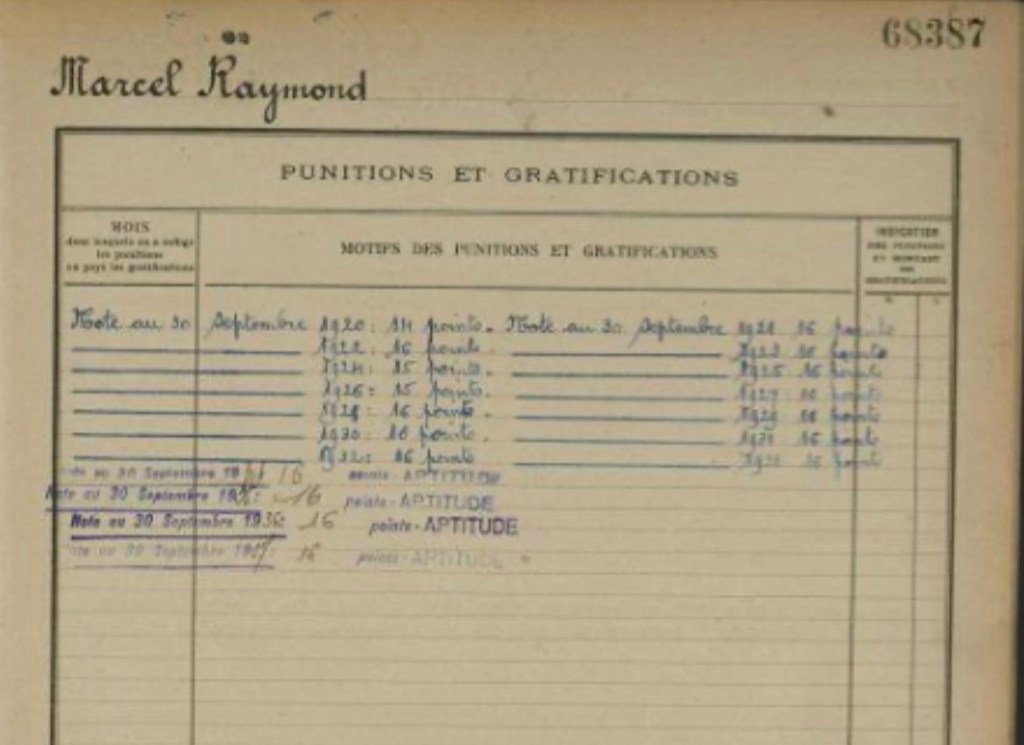
Punitions et gratifications
One of the most intriguing pages in the file carries the heading:
Punitions et gratifications
Literally, something like Punishments and rewards / commendations.
It sounds as though we are about to discover Marcel’s disciplinary history.
Instead, the page is almost reassuringly dull.
The surviving entries appear largely to be annual aptitude or merit assessments.
From 1920 through 1931, Marcel repeatedly receives a score of 16 points, with later entries continuing the same pattern of assessment.
Rather than revealing some scandalous collection of railway misdemeanours, the page suggests the opposite.
Marcel appears to have been regarded consistently as competent, reliable and suitable in his work.
There is something rather lovely about twelve years of bureaucratic consistency.
No dramatic rise.
No spectacular collapse.
Just:
16 points.
Again.
And again.
And again.
Retirement
Eventually the sequence of promotions, transfers and assessments comes to an end.
The final major entry reads:
1er octobre 1935 — Mis à la retraite normale
On 1 October 1935, Marcel Raymond Paquier retired under the normal retirement scheme.
Beneath it are the administrative calculations relating to his pension.
A later stamped annotation dated 15 November 1942 appears to concern that pension rather than a return to employment.
And with that, the railway file effectively closes.
Marcel had entered the railway in 1907.
Twenty-eight years later, he left it.
Between those two dates lay a world war.
No. 68387
What I like most about this record is its shape.
It begins with an apparently anonymous railway employee:
No. 68387.
Then, line by line, a person emerges.
A man born in Alençon.
Educated in technical work.
A railway draughtsman.
A soldier.
A veteran of the First World War.
A recipient of the Croix de Guerre with two citations.
And then, once again, a railwayman.
His war was extraordinary.
The rest of his life, at least as this file records it, was wonderfully ordinary.
And perhaps that is the point.
History naturally pulls us towards wars, disasters, medals and deaths.
But most lives are actually lived somewhere between those moments: going to work, earning a salary, being assessed, being promoted, coming home, and eventually retiring.
Marcel Raymond Paquier survived the extraordinary and returned to the ordinary.
Partly because I already know him better than most of the people who will eventually appear here. I have followed him through photographs, military papers, family records and the places connected with his life.
But that is not really why he matters.
He matters because he was ordinary.
He was not famous. He did not leave behind memoirs, speeches or a great body of work. He was a young man from a working family whose life can now be reconstructed only from fragments: photographs, a military record, names, dates and places.
And yet that was a life.
He had parents. Brothers and sisters. Work around him. Familiar streets.
People who knew the sound of his voice.
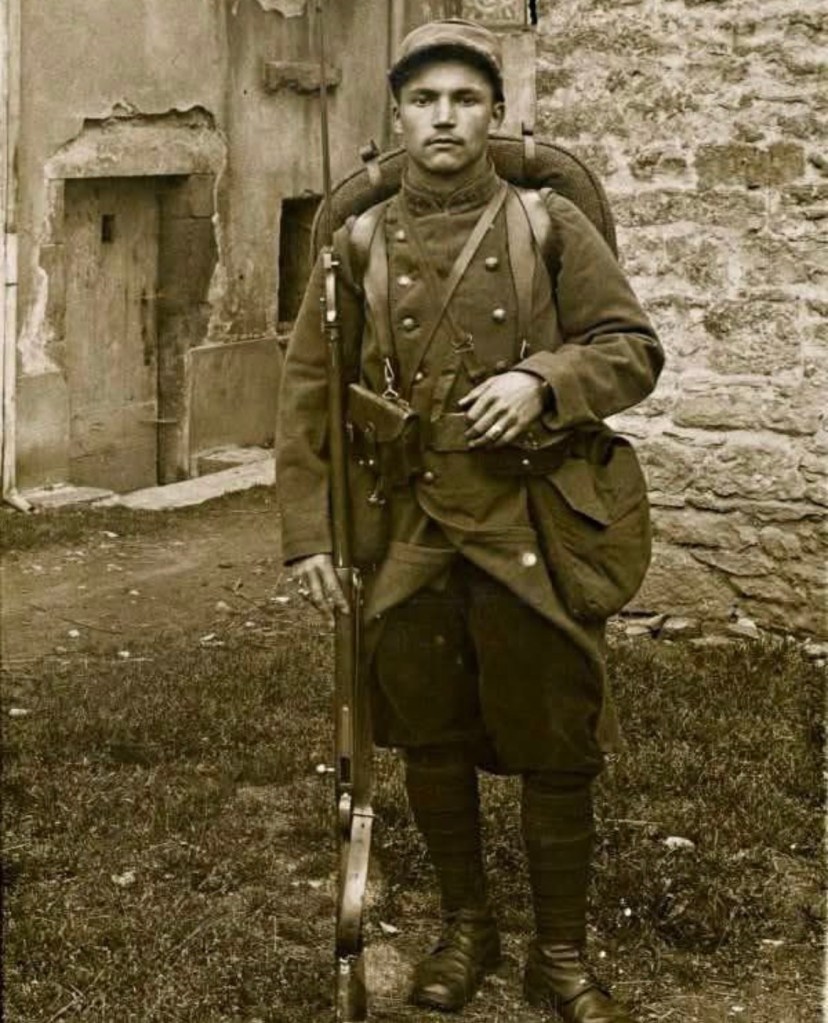
He had a face that was once immediately recognisable to other people, even though to us it now survives only in photographs.
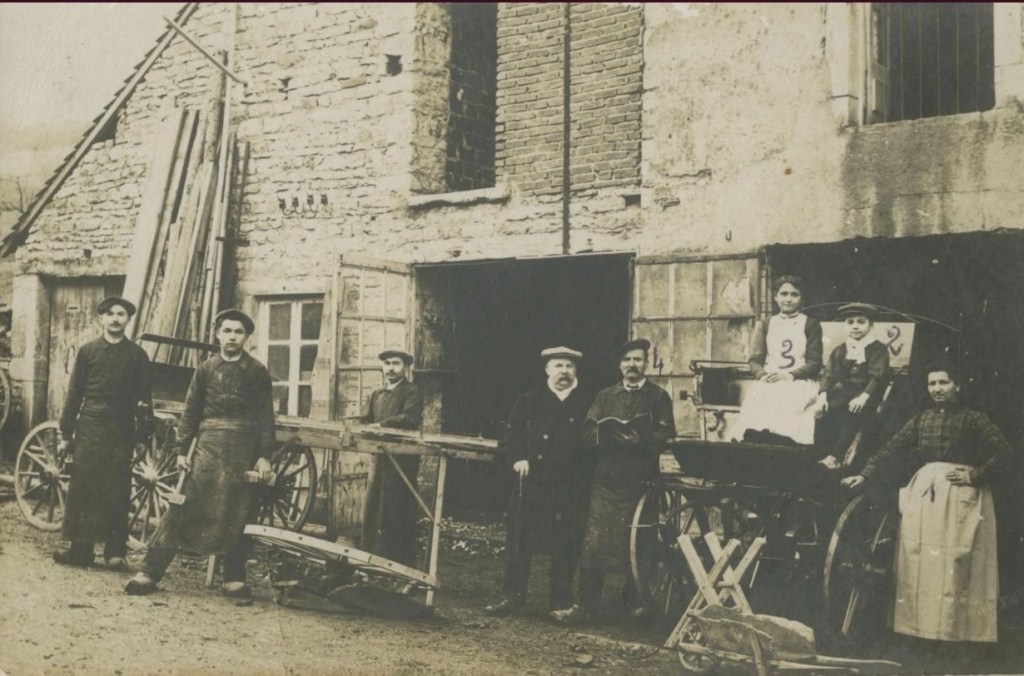
Claude grew up at Saint-Gengoux-le-National in Saône-et-Loire. His father ran a family business involving forging, wheelwright work and a sawmill, and the older sons worked there. The surviving family photographs allow us to see something that military paperwork cannot: Claude belonged to a household, a workplace and a community before he ever became a soldier.
Then came the war.
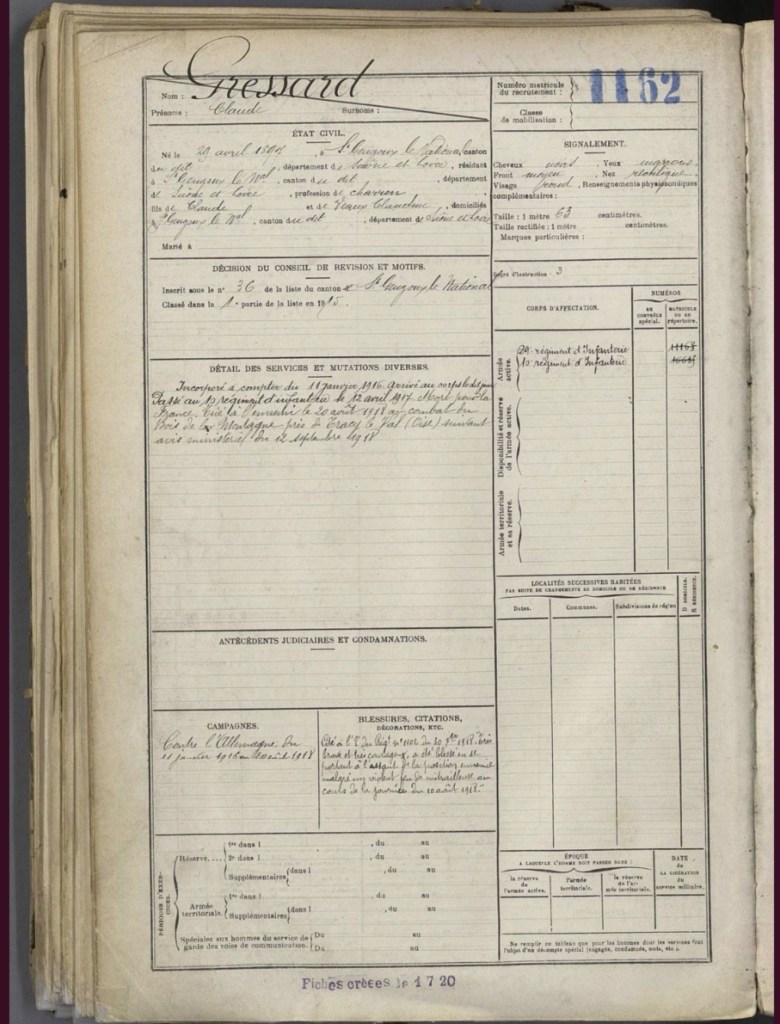
Claude belonged to the 1917 recruiting class and was given military number 1162 at Mâcon. The surviving family account records that he was killed at Tracy-le-Val, in the Bois de la Montagne near Caisnes, on 20 August 1918. He was twenty-one.
He had travelled hundreds of miles from home and was fighting in a part of France that had endured German occupation.
He could not have known that the war which had swallowed so many lives was almost finished.
Just 83 days later, the Armistice of 11 November 1918 would bring the fighting on the Western Front to an end.
More than a century later, it would be very easy for Claude to become simply another name among millions.
A date.
A casualty.
A line in a register.
I think that is precisely why he should still matter.
History is very good at remembering kings, generals, politicians, inventors and people who made themselves impossible to ignore.
Most human beings never had that privilege.
Their lives were smaller, quieter and far less documented.
But smaller does not mean less important.
The railway worker whose employment record survives in an archive mattered to somebody.
The traveller whose old passport records a handful of border crossings had reasons for making those journeys.
The woman mentioned once in a court record, the child appearing in a census, the labourer whose name survives on a pay sheet — each of them had an entire existence before and after the few surviving lines that now represent them.
We may never recover all of those lives.
Sometimes we will recover very little.
But occasionally there is enough left behind to say:
You were here.
Your life happened.
You have not entirely disappeared.
That is what Life in the Margins is for.
Claude is simply the first person through the door.
The record — Matricule 1162
Below is the transcript and translation –
Name: Gressard Forenames: Claude Military registration number: 1162 Born: 22 April 1897 Place: Saint-Gengoux-le-National, Saône-et-Loire Occupation:Charron — wheelwright Height: 1 metre 63 Education level: 3 Recruiting class: 1917
Service
Claude was incorporated from 11 January 1916.
The handwriting records his wartime service and ultimately states that he was:
“Tué à l’ennemi le 20 août 1918 au combat du Bois de la Montagne près de Caisnes (Oise).”
In English:
“Killed in action on 20 August 1918 during the fighting at the Bois de la Montagne, near Caisnes, Oise.”
The family archive adds that Claude was initially buried in the cemetery at Ferme de Bimont, near Tracy-le-Mont. His body was later returned to his parents and reburied in the cemetery at Saint-Gengoux-le-National.
Matricule 1162 to the army. Claude to everyone who knew him.
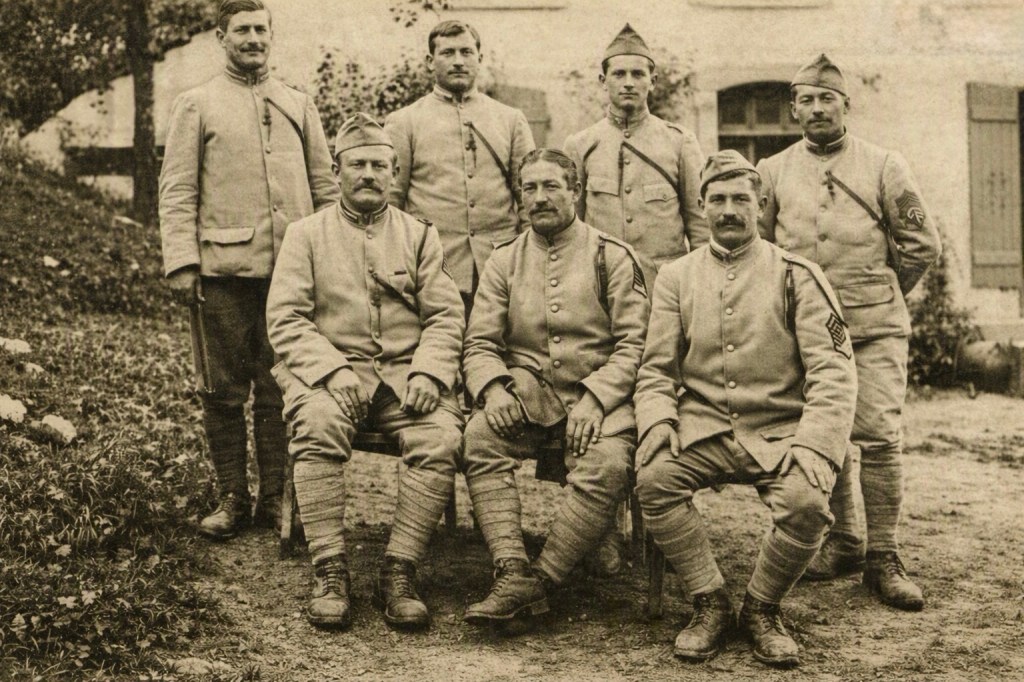
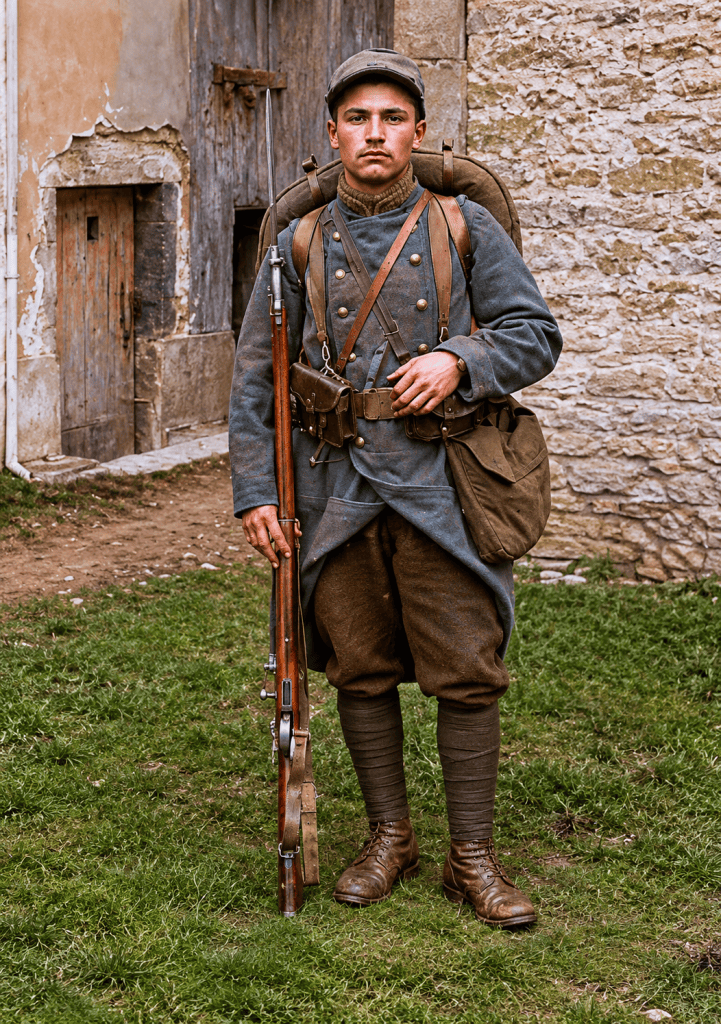
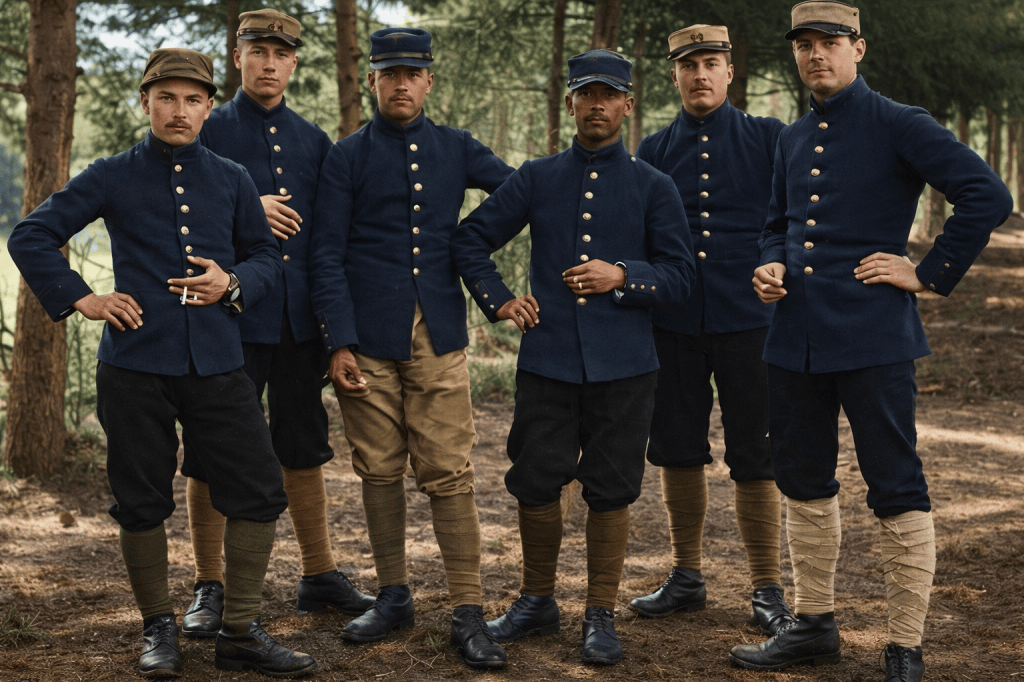
I have taken some time to create colourised versions.
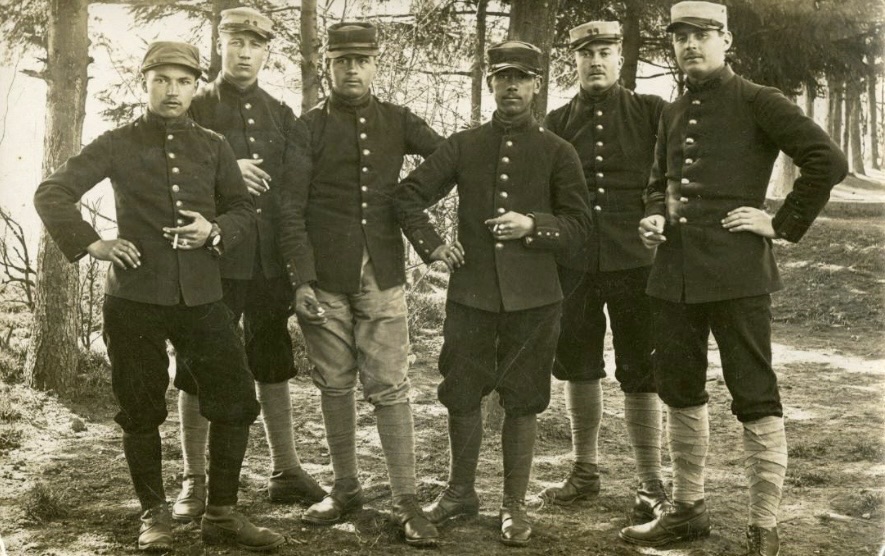
Claude Gressard Claude Gressard on the left and colleagues