The Iroquois Theatre Fire, Chicago, 1903
When I go to the theatre — and I visit a few times a year — I have always been irritated by the opening act.
Not the actual opening act.
The dance of the safety curtain.
Down it goes.
Up again.
Then, sometimes, down once more.
There have been occasions when I have sat there thinking that this apparently unnecessary performance is delaying the performance I actually paid to see.
I was irritated.
Now I am not.
This is why.
Absolutely Fireproof
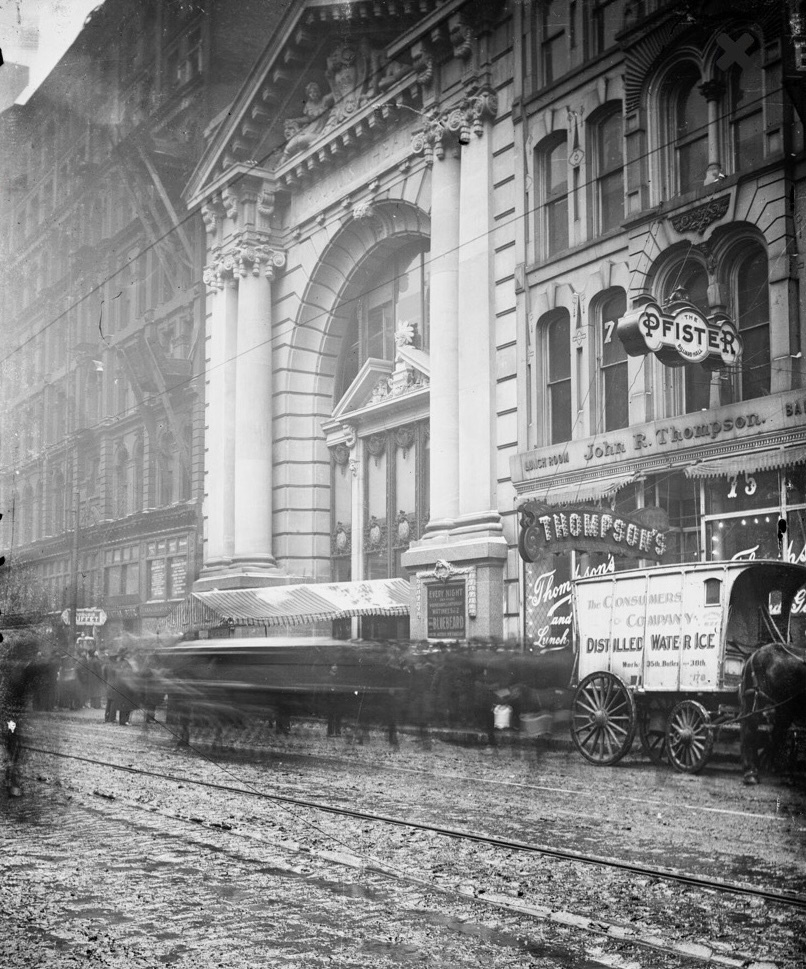
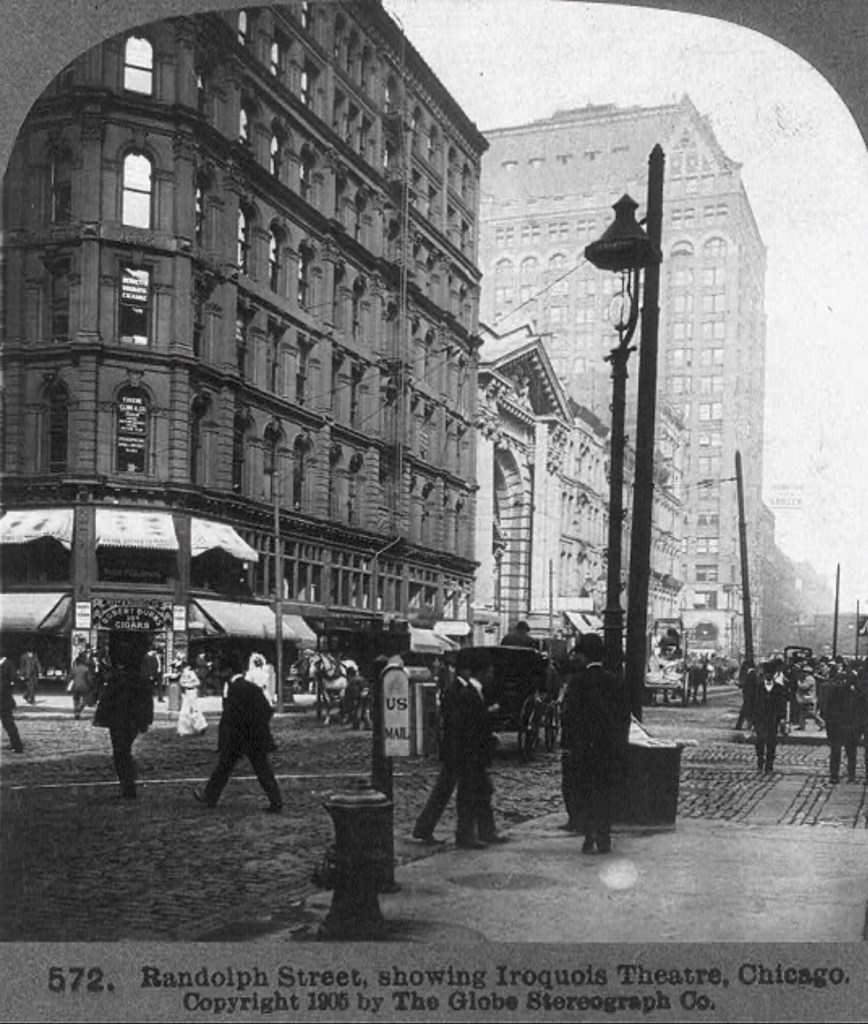
On 30 December 1903, the Iroquois Theatre in Chicago was barely five weeks old.
It was lavish, modern and impressive — one newspaper described it as perhaps the finest theatre in America. More importantly, its promoters had advertised it as “absolutely fireproof.”
That afternoon the theatre was packed for a matinee performance of Mr. Bluebeard. Many of those in the audience were women and children enjoying the Christmas holidays.
At around 3.15pm, during the second act, a spark from an arc light ignited material above the stage.
In a modern theatre that should have been serious, but containable.
At the Iroquois, it became catastrophic.
Above the performers hung an enormous quantity of combustible scenery — painted canvas, gauze, timber and rope. A later fire-safety study estimated that the stage contained more than ten tons of combustible material.
The fire spread with terrifying speed.
Actor Eddie Foy attempted to calm the audience while the orchestra continued to play. Behind him, stagehands tried to lower the theatre’s supposedly fire-resistant curtain.
It came down.
And then it stopped.
The curtain snagged before it could completely seal the stage from the auditorium.
That was the moment when something I once regarded as theatrical fussiness suddenly becomes rather important.
A safety curtain is only useful if it actually comes down.
The Theatre Became a Trap
The failed curtain was only one link in a much longer chain.
Some exits were difficult to find because they were concealed by decorative curtains. Other routes were obstructed. Metal gates separating different seating levels were locked, partly to prevent people in cheaper seats moving into more expensive areas. Some exit doors opened inward, becoming almost impossible to move once crowds pressed against them.
There were also inadequate alarms and firefighting arrangements. Roof vents intended to allow smoke and heat to escape were not functioning as they should have been.
Then another decision transformed the fire.
A large backstage door was opened as performers and stagehands tried to escape.
The sudden influx of air fed the flames.
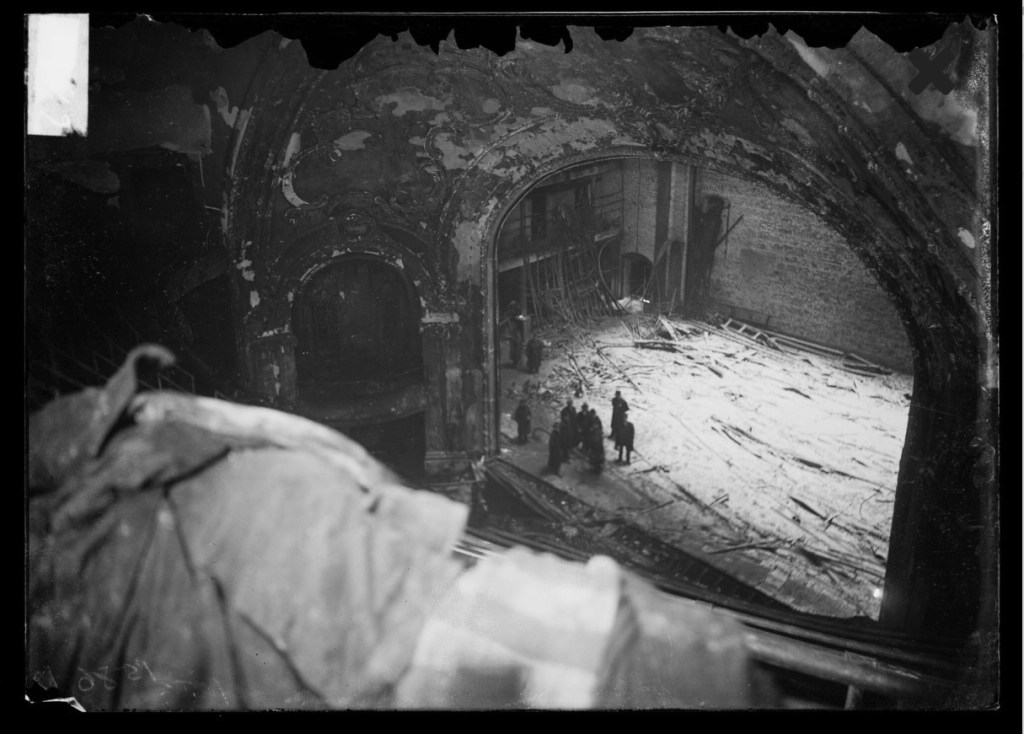
With the safety curtain unable to isolate the stage, fire and superheated gases blasted outward into the auditorium, particularly toward the upper galleries.
People who had come to see a Christmas matinee now found themselves trapped inside a building that had been advertised as safe.
More than 600 people died; the commonly accepted figure is 602.
The Library of Congress summary of contemporary reporting is brutally simple: when firefighters arrived, they found hundreds already dead and virtually nobody left to rescue.
Everyone Was Responsible. Therefore Nobody Was.
The aftermath produced anger almost immediately.
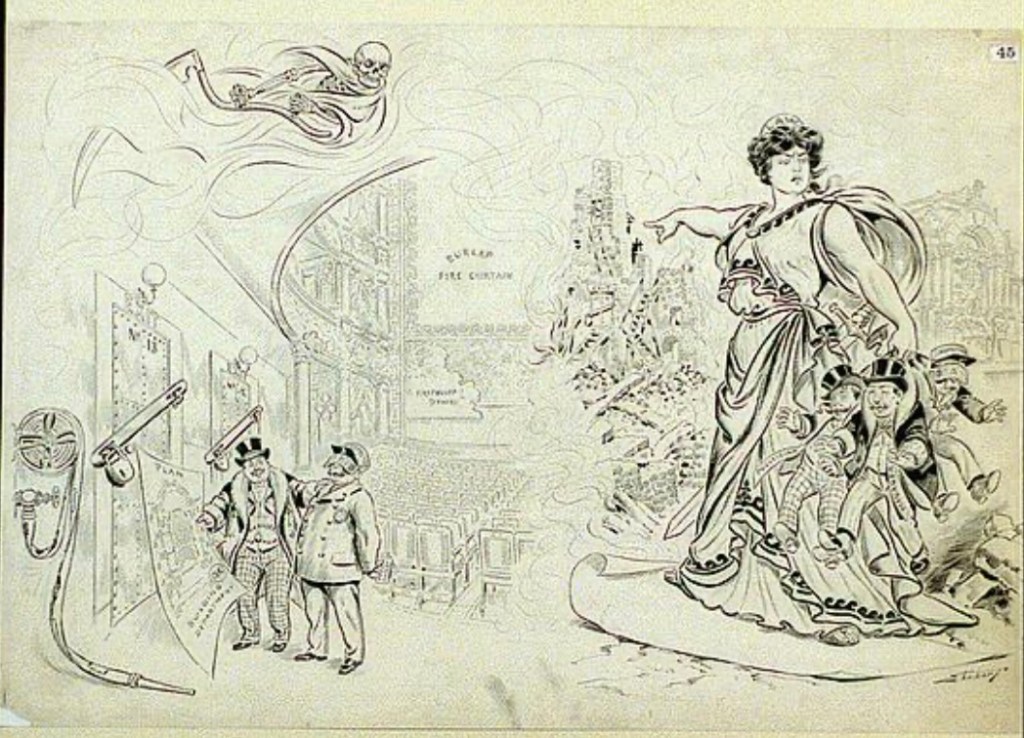
Theatre owners and managers, the architect and city officials all came under investigation. Manager Will J. Davis was among those caught up in the legal proceedings, while Chicago mayor Carter Harrison Jr. and other officials also faced accusations or charges during the various investigations that followed.
But responsibility became extraordinarily difficult to pin on any single person.
There had been too many failures.
The building.
The inspections.
The doors.
The exits.
The curtain.
The scenery.
The fire precautions.
The management.
Smithsonian describes the resulting problem rather neatly: culpability became an almost impossible web because so many different people had failed in different ways.
The result was depressingly familiar.
There was plenty of blame.
Far less individual accountability.
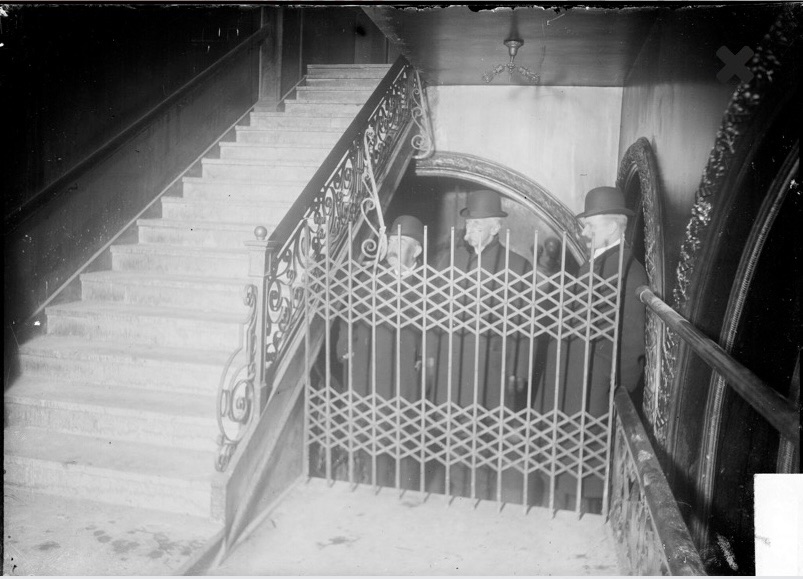
What Changed
Something did change, however.
Within days Chicago closed its theatres for inspection and improvement. Other American cities began examining their own venues, and Chicago introduced stricter rules governing exits, aisles, occupancy, fire alarms, scenery, sprinklers and emergency lighting.
The disaster also formed part of the history that eventually produced the panic bar — the wonderfully simple device that allows an emergency door to be opened merely by pushing against it.
No complicated catch.
No unfamiliar handle.
Just push and get out.
And then there is the safety curtain.
That irritating thing.
The one that descends before the performance.
And rises.
And occasionally descends again.
It is being tested because, on a December afternoon in Chicago in 1903, one failed to do the job for which it existed.
More than six hundred people discovered what happens when theatre safety becomes something assumed rather than something demonstrated.
So the next time I am sitting there, programme in hand, watching a curtain travel slowly towards the stage floor while wondering when the show is actually going to start, I shall probably think differently.
It can go down.
It can come back up.
It can have another go if it likes.
I shall wait.
Because now I know why they test it.
 Life in the Margins