Claude Gressard
22 April 1897 – 20 August 1918
Claude is where I have decided to begin.
Partly because I already know him better than most of the people who will eventually appear here. I have followed him through photographs, military papers, family records and the places connected with his life.
But that is not really why he matters.
He matters because he was ordinary.
He was not famous. He did not leave behind memoirs, speeches or a great body of work. He was a young man from a working family whose life can now be reconstructed only from fragments: photographs, a military record, names, dates and places.
And yet that was a life.
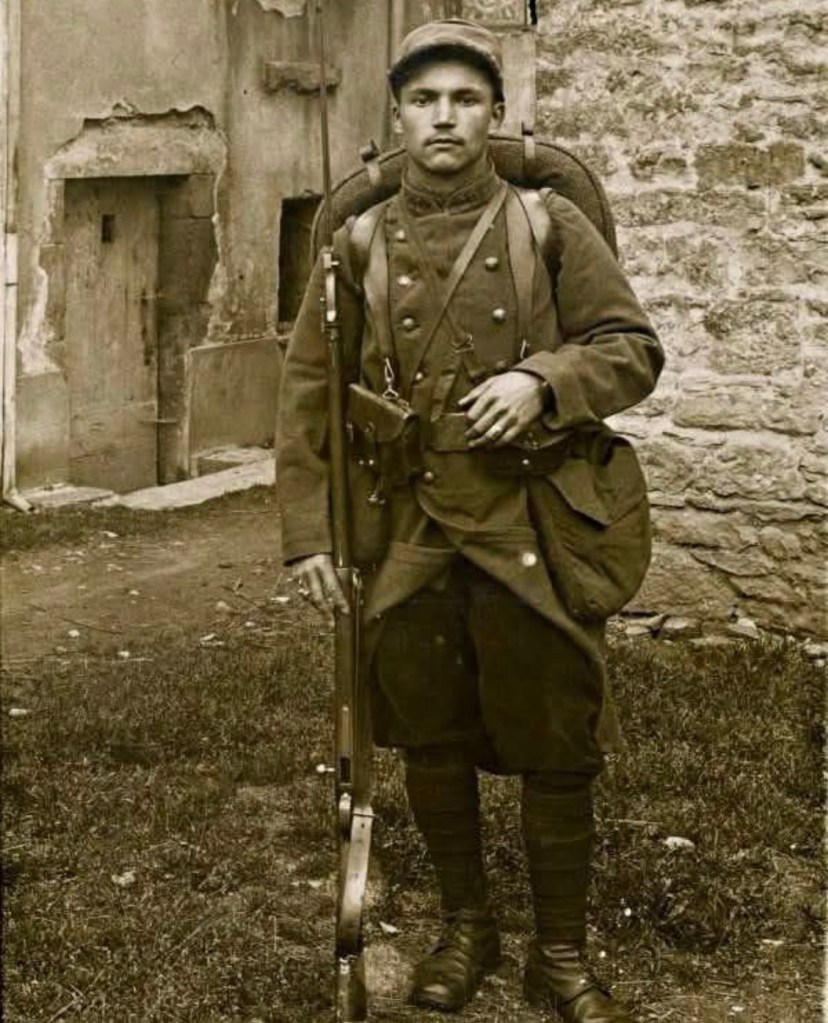
He had parents. Brothers and sisters. Work around him. Familiar streets.
People who knew the sound of his voice.
He had a face that was once immediately recognisable to other people, even though to us it now survives only in photographs.
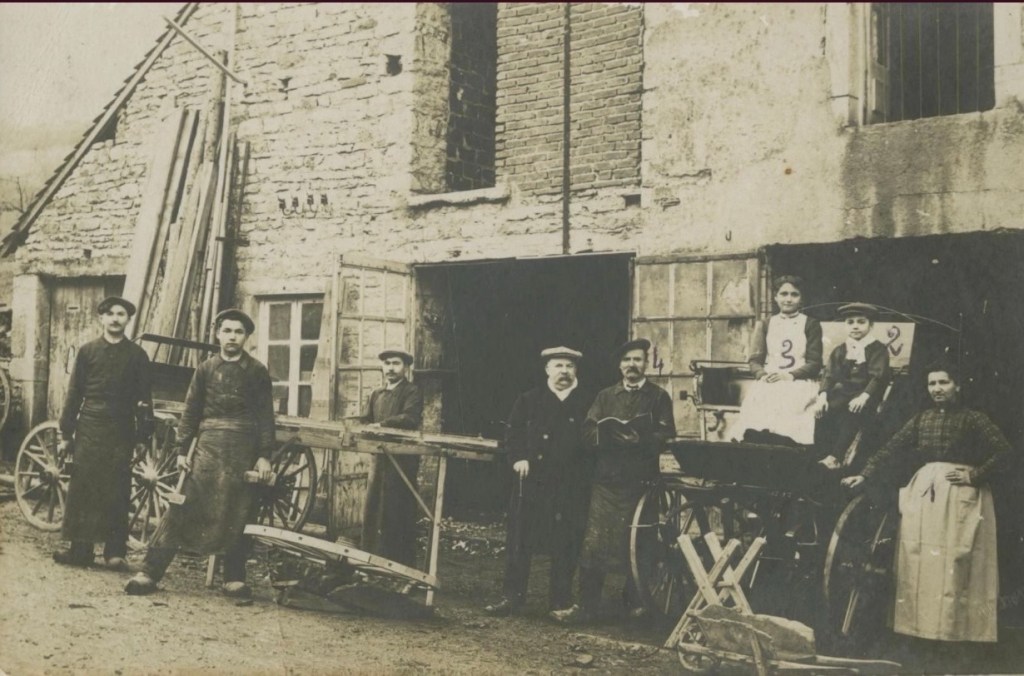
Claude grew up at Saint-Gengoux-le-National in Saône-et-Loire. His father ran a family business involving forging, wheelwright work and a sawmill, and the older sons worked there. The surviving family photographs allow us to see something that military paperwork cannot: Claude belonged to a household, a workplace and a community before he ever became a soldier.
Then came the war.
Claude belonged to the 1917 recruiting class and was given military number 1162 at Mâcon. The surviving family account records that he was killed at Tracy-le-Val, in the Bois de la Montagne near Caisnes, on 20 August 1918. He was twenty-one.
He had travelled hundreds of miles from home and was fighting in a part of France that had endured German occupation.
He could not have known that the war which had swallowed so many lives was almost finished.
Just 83 days later, the Armistice of 11 November 1918 would bring the fighting on the Western Front to an end.
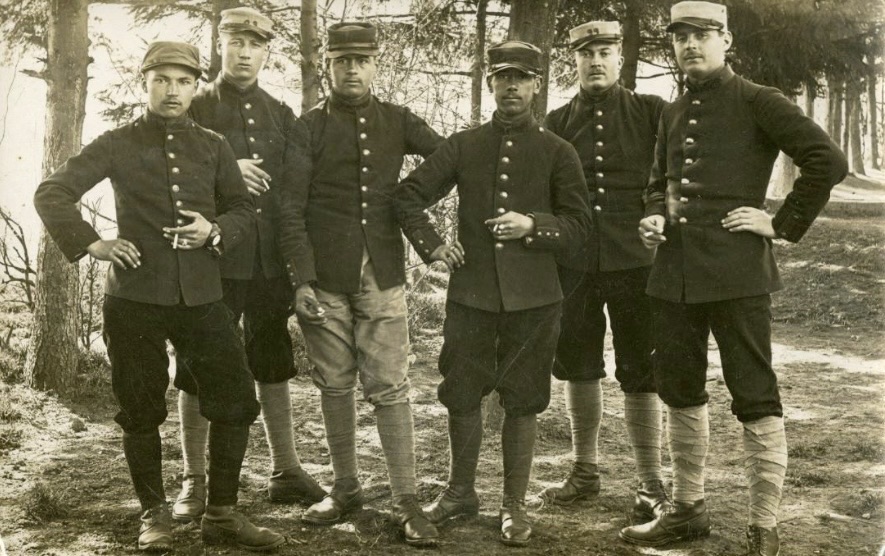
More than a century later, it would be very easy for Claude to become simply another name among millions.
A date.
A casualty.
A line in a register.
I think that is precisely why he should still matter.
History is very good at remembering kings, generals, politicians, inventors and people who made themselves impossible to ignore.
Most human beings never had that privilege.
Their lives were smaller, quieter and far less documented.
But smaller does not mean less important.
The railway worker whose employment record survives in an archive mattered to somebody.
The traveller whose old passport records a handful of border crossings had reasons for making those journeys.
The woman mentioned once in a court record, the child appearing in a census, the labourer whose name survives on a pay sheet — each of them had an entire existence before and after the few surviving lines that now represent them.
We may never recover all of those lives.
Sometimes we will recover very little.
But occasionally there is enough left behind to say:
You were here.
Your life happened.
You have not entirely disappeared.
That is what Life in the Margins is for.
Claude is simply the first person through the door.
The record — Matricule 1162
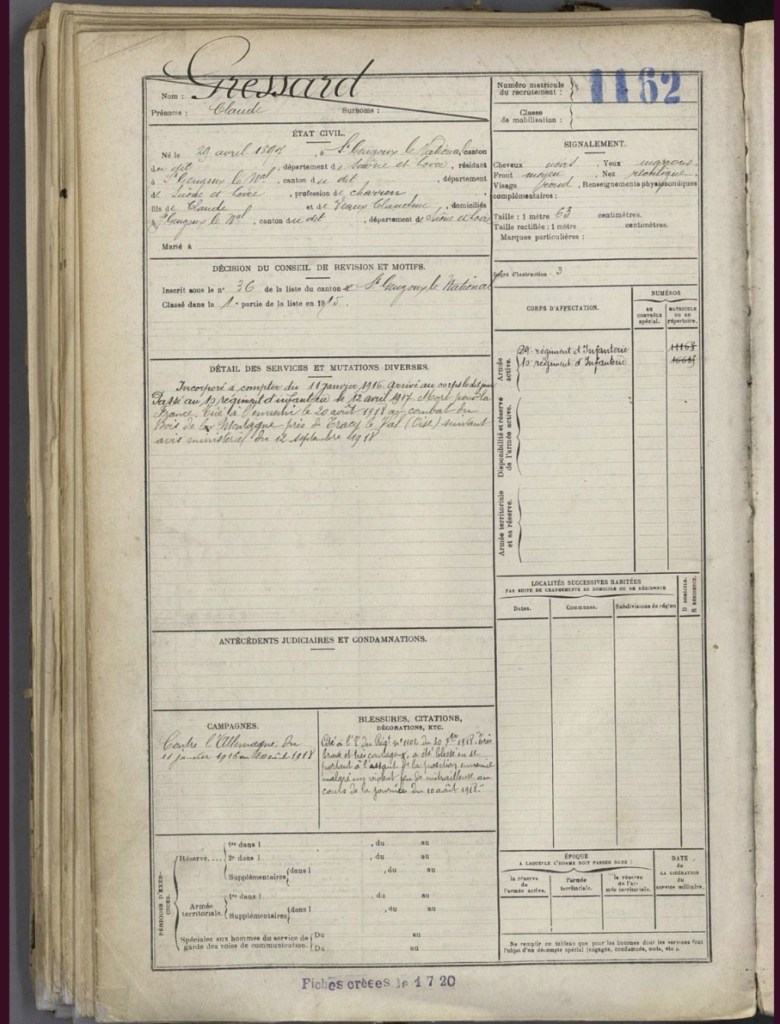
Below is the transcript and translation –
Name: Gressard
Forenames: Claude
Military registration number: 1162
Born: 22 April 1897
Place: Saint-Gengoux-le-National, Saône-et-Loire
Occupation: Charron — wheelwright
Height: 1 metre 63
Education level: 3
Recruiting class: 1917
Service
Claude was incorporated from 11 January 1916.
The handwriting records his wartime service and ultimately states that he was:
“Tué à l’ennemi le 20 août 1918 au combat du Bois de la Montagne près de Caisnes (Oise).”
In English:
“Killed in action on 20 August 1918 during the fighting at the Bois de la Montagne, near Caisnes, Oise.”
The family archive adds that Claude was initially buried in the cemetery at Ferme de Bimont, near Tracy-le-Mont. His body was later returned to his parents and reburied in the cemetery at Saint-Gengoux-le-National.
Matricule 1162 to the army. Claude to everyone who knew him.
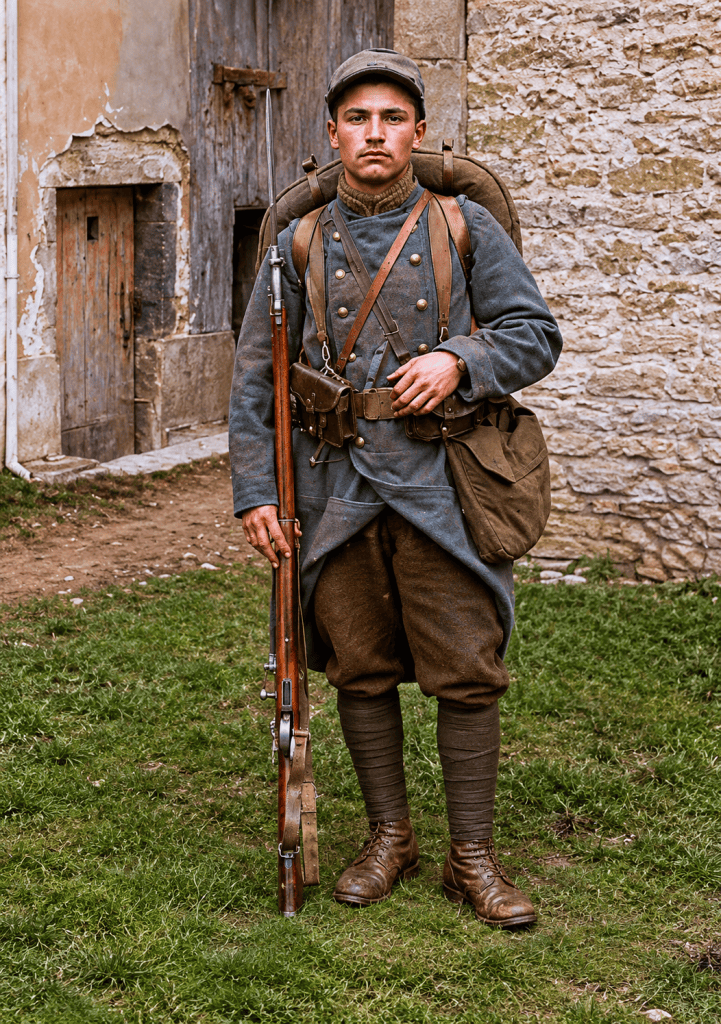
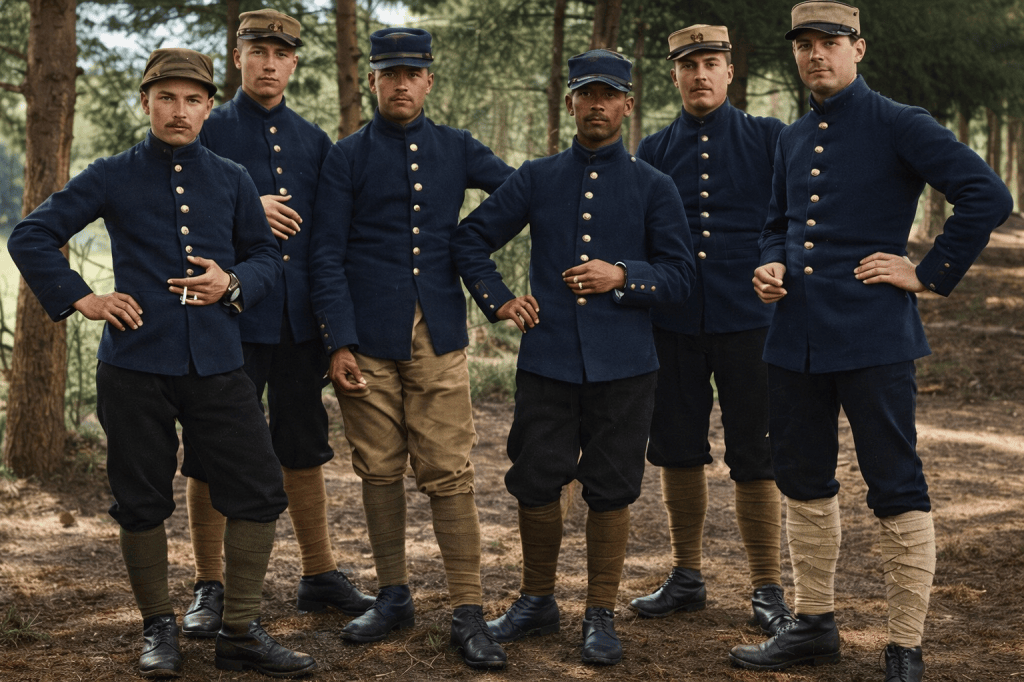
I have taken some time to create colourised versions.
 Life in the Margins