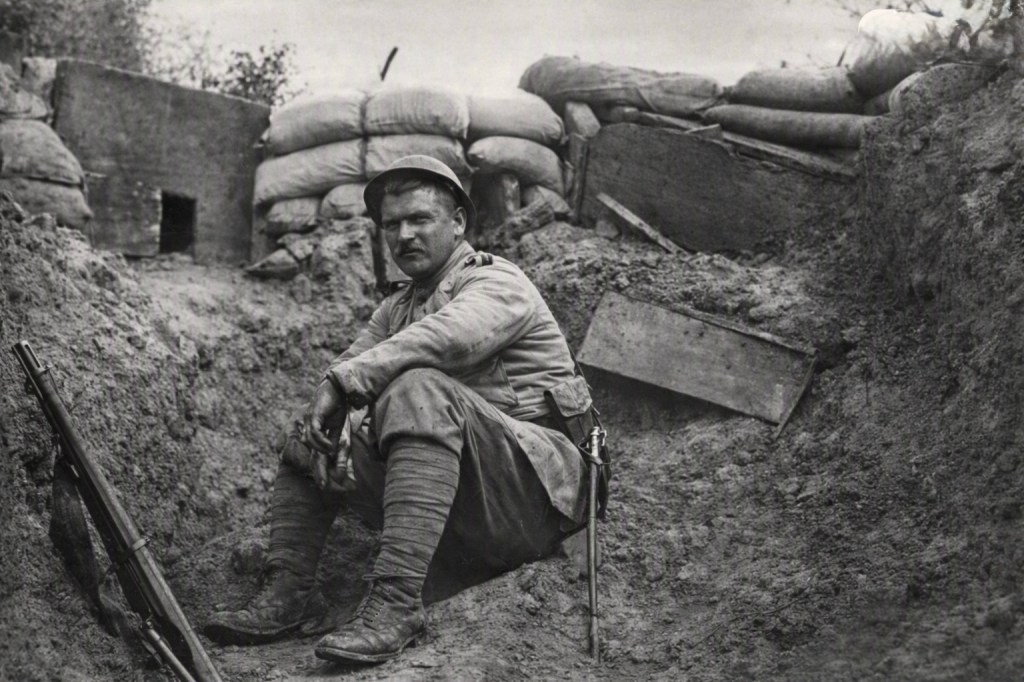
Victor Petitbon: A War in Postcards
Victor Petitbon was born on 8 September 1881 in Monein, in the Basses-Pyrénées.
Before the war, he was a tinsmith. His wife, Marcelle — often called Marceline — ran the Café Boy in the rue du Commerce. They had two sons: Émile, known as Millette, and Charles, known as Charlot.
In 1914, Victor was mobilised as a corporal in the 34th Infantry Regiment, 1st Company, 2nd Section.
What survives of his war is not a diary, nor a memoir written decades later.
It is a trail of postcards.
Thirty-one of them survive, sent between September 1914 and March 1918. Through them Victor kept a line open to home: to his wife, to his children, and to the ordinary life he had been pulled away from.
September 1914: wounded and sent south
Victor was wounded in September 1914 and evacuated away from the fighting.
On 9 September he wrote that he had arrived in Bayonne, having travelled via Narbonne and Bordeaux, and that he was waiting to be sent on to Biarritz. Hundreds of wounded men were expected.
He eventually reached the temporary hospital at the Municipal Casino in Biarritz, where he remained for months.
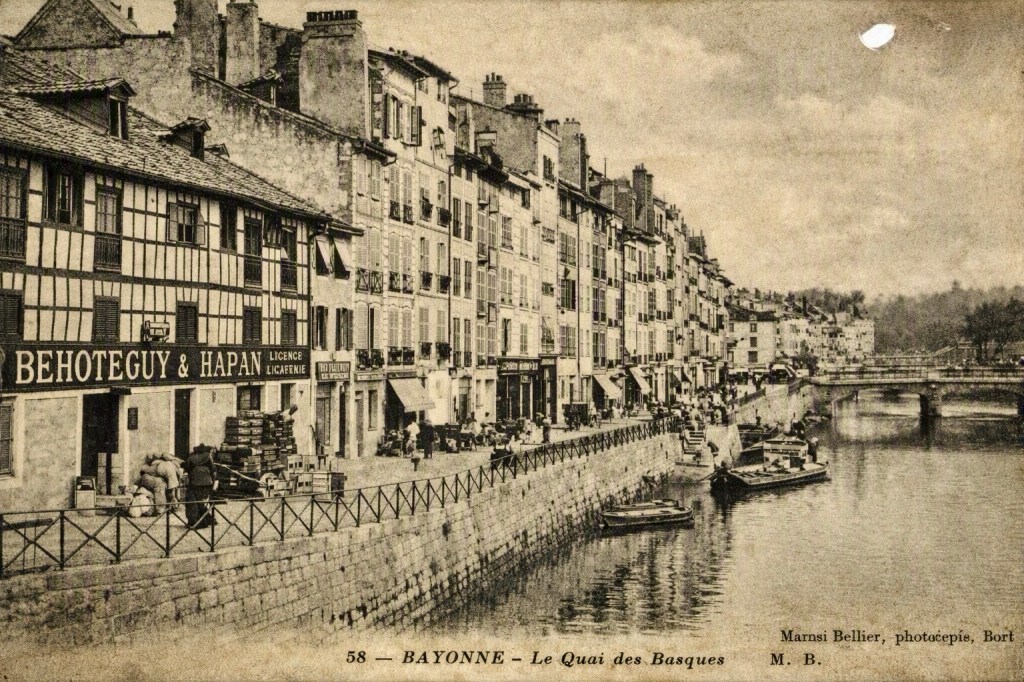
Bayonne – Le Quai des Basques.
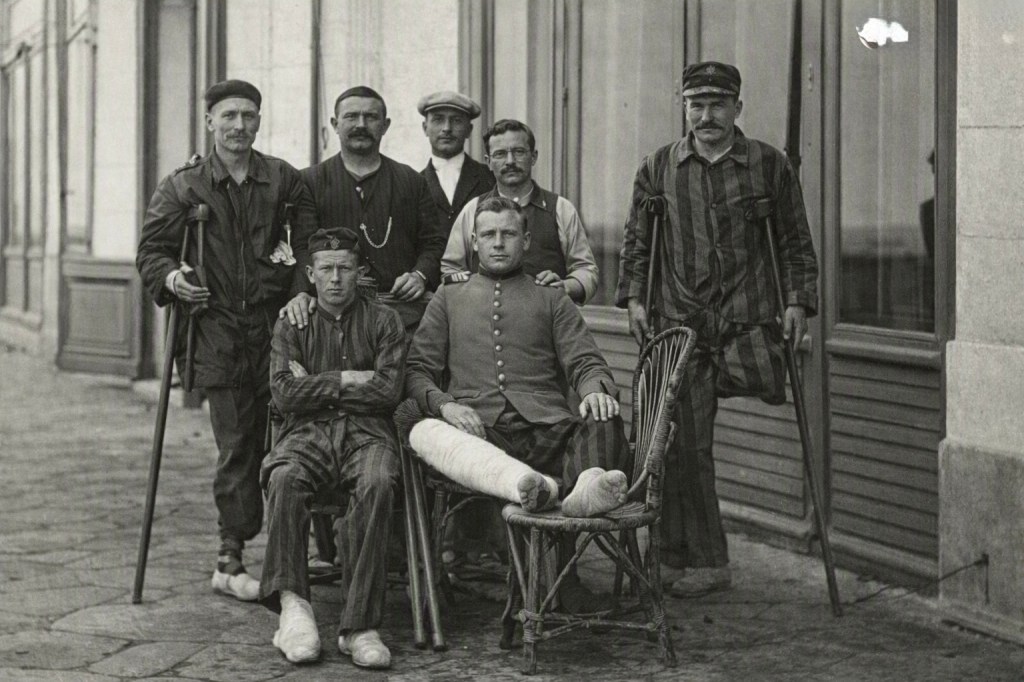
Group of wounded and convalescent soldiers.
Victor is standing in the second row, second from the left, identifiable by his watch chain. The crutches, bandaged limbs and seated wounded men show another side of the war: recovery rather than combat.
Victor was still in Biarritz at the end of May 1915.
The surviving correspondence does not explain every detail of this period, however, research suggests that he may have had leave. His second son, Charles, was born on 12 November 1915.
By July 1915, Victor was on the move again, heading east.
Then the surviving correspondence falls silent for almost a year.
1916: back to the trenches
On 7 August 1916 the postcards begin again.
Victor wrote to his “dear little wife” and children and tried to explain trench life.
The image on the card gave them, he said, a glimpse of it — although reality was wetter.
He and his comrades were heading into a large wood. Victor hoped they might find mushrooms.
He had found hazelnuts and was squeezing them between his fingers as he wrote.
At the same time, artillery fire was so heavy that there were moments when the men could barely hear one another.
And then, almost in the same breath, Victor asked about the wine from Pardies and wondered whether he might taste it on leave.
That is one of the most remarkable things about these postcards.
War and ordinary life sit side by side.
Gunfire. Mushrooms. Hazelnuts. Wine. Children.
The front was always present, but so was home.
1917: mud, waiting and the hope of leave
By July 1917 Victor was still at the front.
The cards he sent during this period included views of places such as Gildwiller, Balschwiller and Belfort. Europeana notes that these images were not necessarily the places from which he was writing. Sometimes they were simply cards he had bought on the road and kept to send later.
That makes them all the more interesting.
They are not a photographic diary in the modern sense.
They are fragments collected along the way.
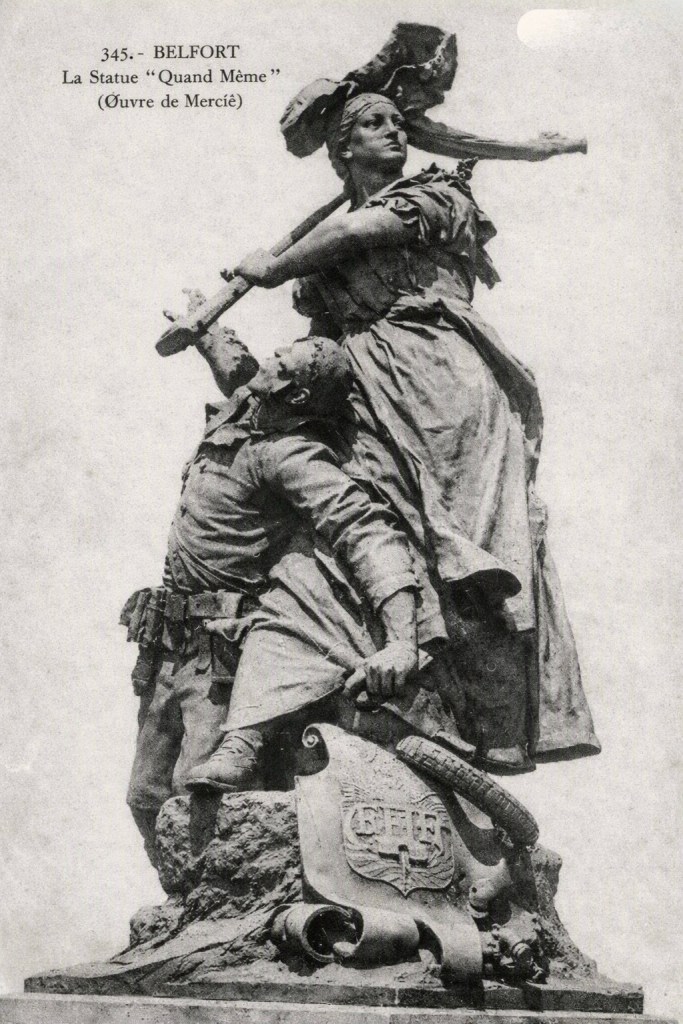
Belfort – “Quand Même” statue.
The postcards Victor sent home often carried patriotic images, even when his own writing was concerned with much smaller and more personal things.
In one card he looked forward to six days of rest. In another he admitted that morale fell sharply when the men knew they had to return to the front.
Again and again, he asked after the children and the vineyard.
On 4 August 1917, after more rain, Victor wrote that they were still wading through mud “like ducks”.
Yet he added that morale remained good and that the troops were fresh.
Four days later he sent a postcard showing Paul Déroulède as a Zouave sounding a bugle.
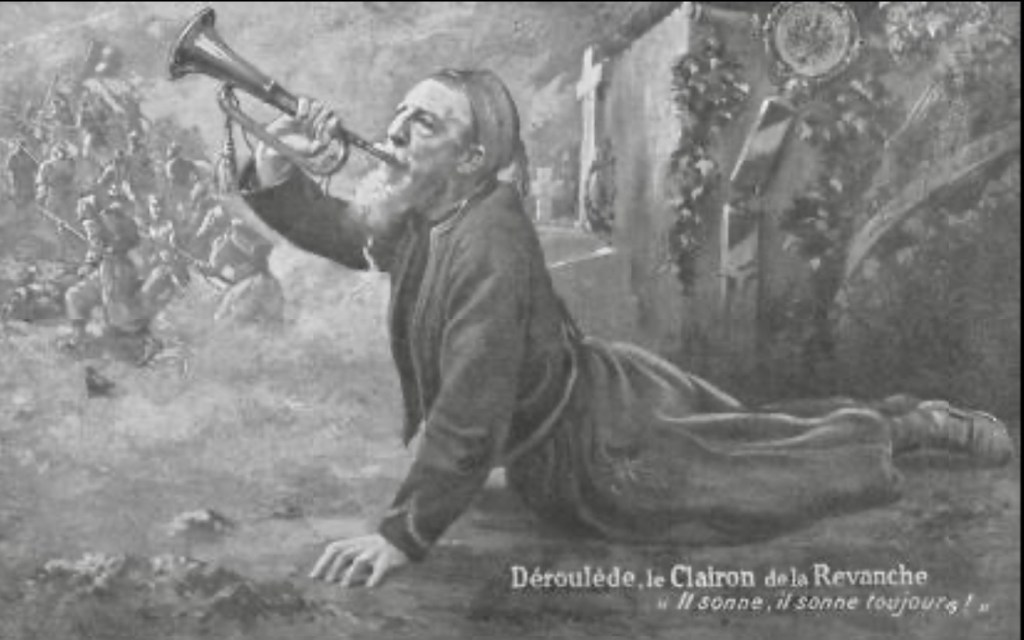
Paul Déroulède – Le Clairon de la Revanche
The patriotic image is almost theatrical.
Victor’s own concerns were much simpler.
He sent the card to Millette and hoped his son would like it.
“My sweetest kisses,” he wrote, “for my three exiles.”
That contrast is worth allowing to stand.
The postcard front speaks of revenge and patriotic spectacle.
The message on the reverse speaks of fatherhood.
By 10 August the tone had worsened.
The weather remained miserable. Victor complained of being wet day and night with nothing dry to change into.
Even from the front, he worried about the harvest at Monein.
“Everything is involved in this war,” he wrote.
It is a small sentence, but an enormous one.
The war was not confined to trenches. It reached vineyards, crops, homes, money, children and waiting wives.
Victor also asked Marceline to keep the postcards carefully.
She did.
More than a century later, we can still read their story.
Waiting to go home
At the end of August, Victor was moved into reserve and given twelve days of rest.
He met men from the regiment that relieved his own and heard them talking about leave.
Victor was heartsick.
His turn had still not come.
He simply wanted to see his children.
At the beginning of September, leave seemed close at last. He asked Marceline to send him money and was plainly embarrassed to have to ask.
On 10 September he was still at the front.
He promised to write every day while travelling, even if he was tired.
And he ended with the sort of sentence that runs through the entire collection:
“Kiss Millette and Charlot and receive, my dear little wife, one million sweet kisses from your husband.”
By 21 September the leave still had not arrived.
Victor imagined Millette meeting him at the station.
He imagined Marceline preparing a good garbure for him.
Then, the next day, the order changed again.
Back to the trenches.
1918: “featherless birds”
The surviving correspondence resumes on 14 March 1918.
Victor sent a postcard connected with the 2nd Aviation Group and wrote:
“My dear Marceline, my dear children, here I am completely in the midst of featherless birds.”
The “birds” were aeroplanes.
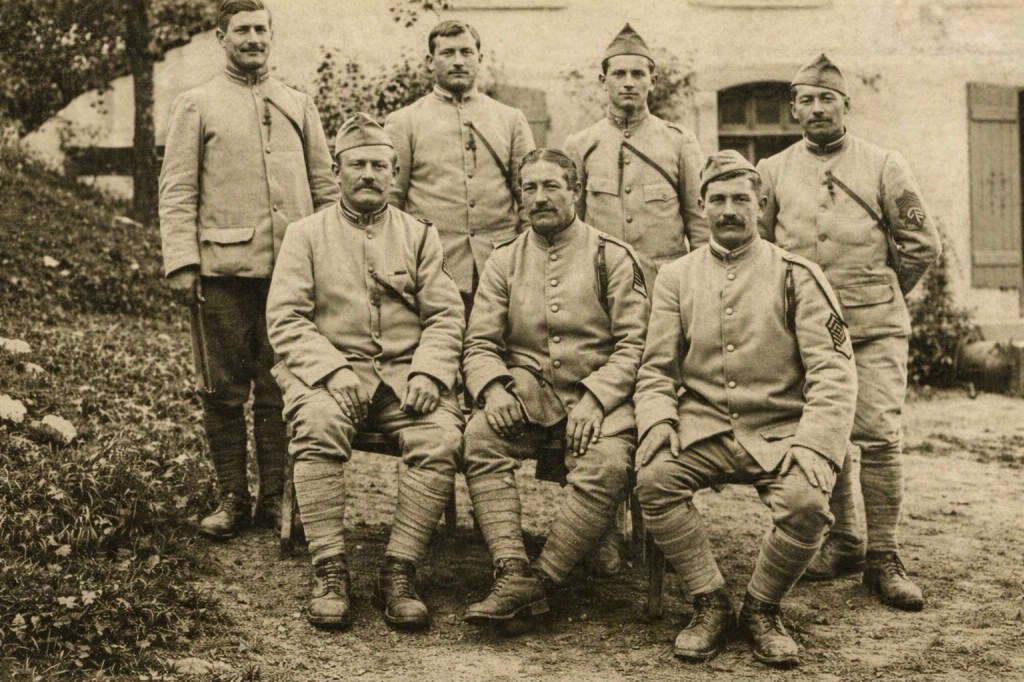
2e Groupe d’Aviation
This is perhaps the best final wartime image because it connects directly with Victor’s own phrase and marks the final stage of the surviving correspondence.
Home
Victor Petitbon survived the war.
After demobilisation, he returned to Monein in February 1919.
He went back to his family.
He went back to the Café Boy.
That simple ending matters.
So many wartime collections end with a death notice, a grave, or a name carved into stone.
Victor’s ends with a return.
And perhaps that is why the postcards feel so alive.
They were not written for history.
They were written because a husband missed his wife, because a father missed his children, because a man standing in mud still wanted to know about wine, weather, crops, food and home.
The postcard fronts showed soldiers, monuments, patriotic figures and aircraft.
Victor’s words showed something else.
A man trying, for four years, to remain connected to the life waiting for him.
Other surviving postcards.
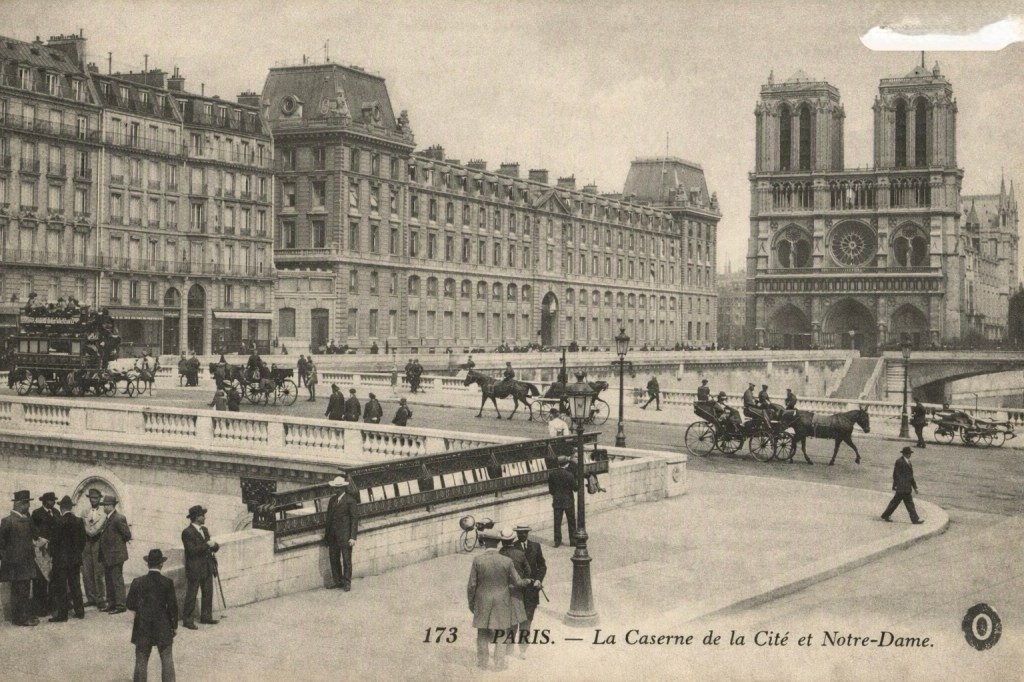
Paris – La Caserne de la Cité et Notre-Dame.
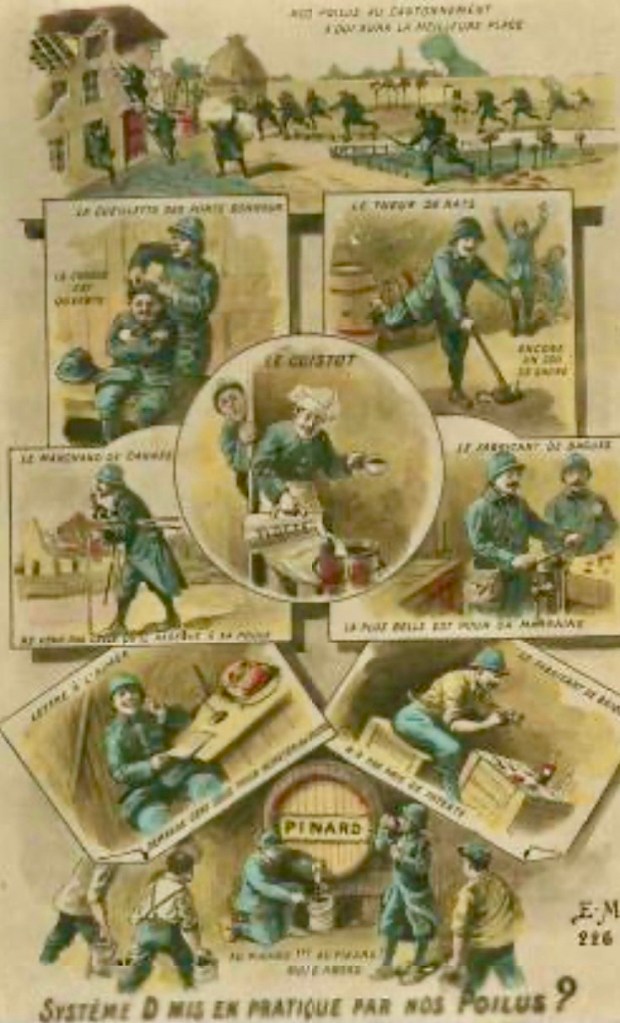
Système D mis en pratique par nos Poilus ?
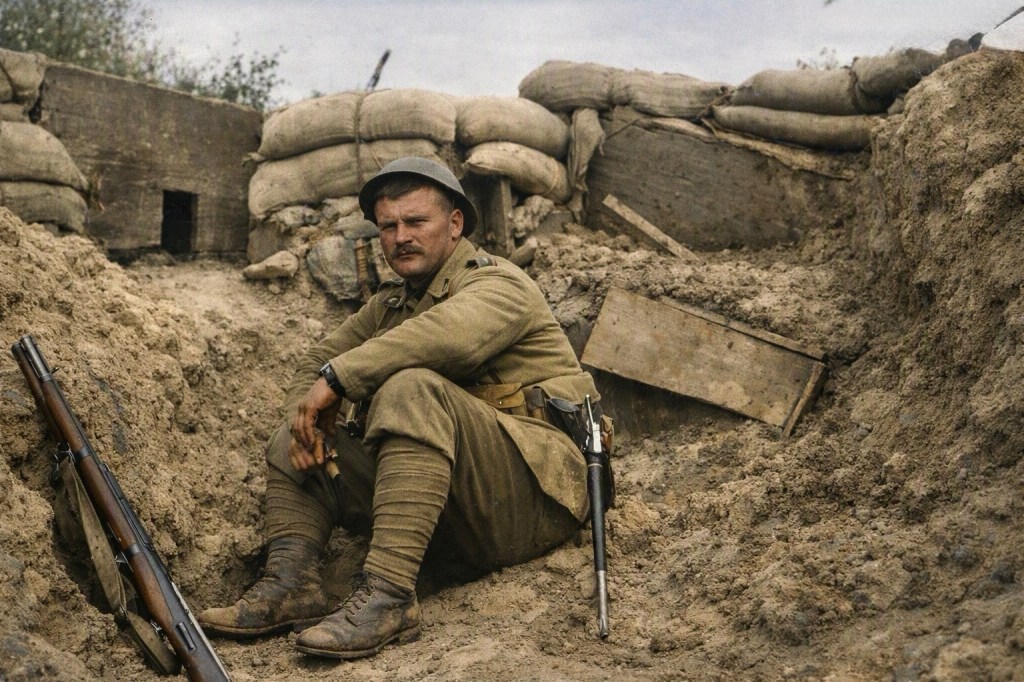
Victor Petitbon in the trenches, c.1917.

